 Ayesha Khan
Product seeding and product gifting get talked about like they’re the same thing. They’re not. Product seeding is a strategic move: a brand sends products to selected creators with a specific goal in mind, whether that’s content, awareness, or eventual sales. Product gifting is looser. It’s giving a creator something for free, often as a gesture, without much attached to it.
The real split is strategy and expectation, not the product itself. Seeding usually comes with creator research, a campaign structure, and some form of tracking. Gifting is more relationship-first, and it doesn’t come with a guaranteed outcome.
For TikTok Shop sellers, mixing the two up gets expensive fast. Samples go out, nothing comes back, and there’s no way to tell whether the creator was wrong for the product or the ask was never clear in the first place. Knowing which one you’re actually running changes how you plan, budget, and follow up.
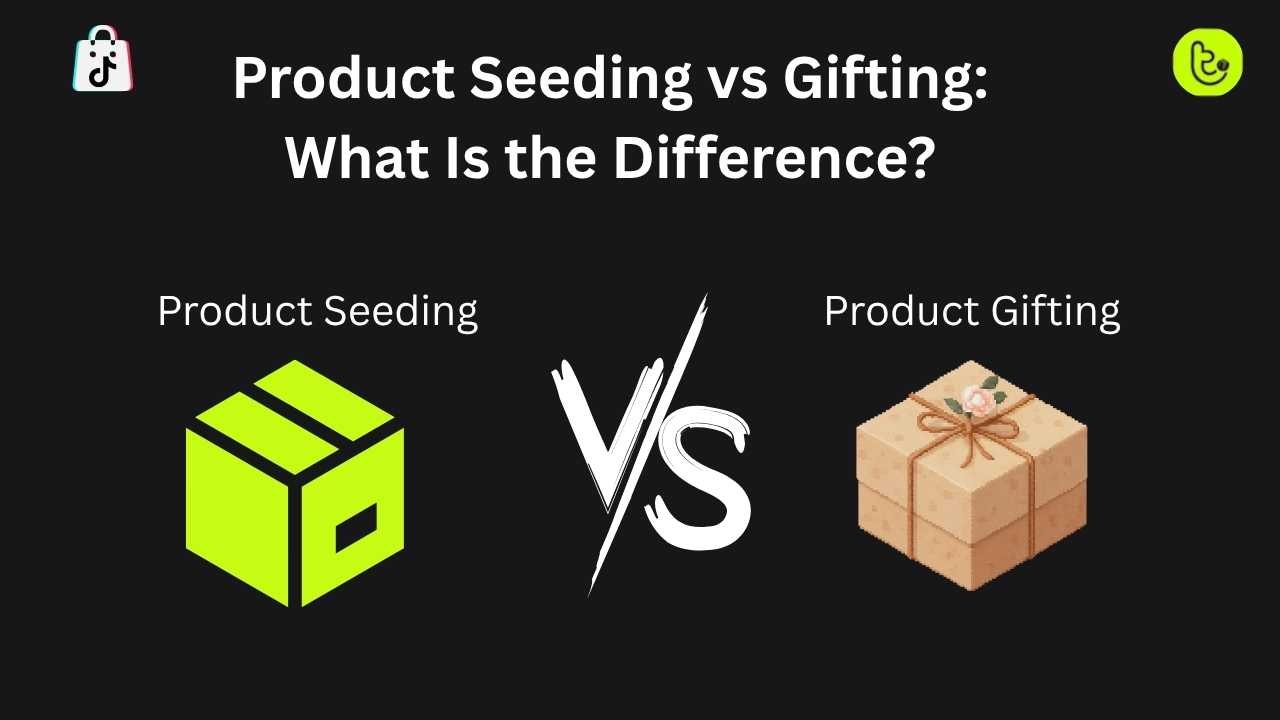
Product Seeding vs Gifting: What’s the Difference?
Product seeding is a strategic creator-marketing tactic where brands send products to selected creators to generate content, awareness, or sales. Product gifting is the broader practice of giving products to creators without necessarily tying the gift to a structured campaign or measurable performance goal.
| Factor | Product Seeding | Product Gifting |
|---|---|---|
| Main purpose | Generate strategic creator content or sales | Build relationships or create awareness |
| Creator selection | Usually researched and intentional | Can be broader or relationship-based |
| Campaign structure | More structured | Often informal |
| Expected outcome | Content, exposure, affiliate activity, or sales | Awareness, goodwill, or possible content |
| Tracking | Usually tracked | May not be tracked |
| Follow-up | Usually part of the process | Often limited |
| Best for | TikTok Shop campaigns and creator programs | PR, relationship building, and awareness |
What Is Product Seeding?
Product seeding is the practice of sending free products to creators who fit a specific campaign goal, chosen because their audience, niche, and content style match what the brand is trying to achieve. It’s not about reach for its own sake. A creator with 8,000 followers in the exact right niche can outperform one with 200,000 followers who has no real connection to the product.
Seeding supports UGC, affiliate recruitment, TikTok Shop content pipelines, product launches, and longer-term creator relationships. Twenty relevant creators, chosen carefully, will usually beat a hundred random ones, fewer samples wasted, fewer products sitting unopened, and a much clearer picture of what actually worked.
How Influencer Product Seeding Works
1. Identify the campaign goal.
2. Define the ideal creator.
3. Research creators and their audiences.
4. Select products suitable for the campaign.
5. Send samples.
6. Give creators useful product information.
7. Track sample delivery and creator activity.
8. Follow up appropriately.
9. Measure content and sales performance.
10. Identify high-performing creators for future campaigns.
What are You Actually Paying for with Product Seeding?
“Free” samples aren’t free. The real cost includes the product itself, shipping, packaging, the creator’s time, any affiliate commission owed on resulting sales, and often some paid amplification once a piece of content proves it works. Sellers who treat seeding as a zero-cost tactic tend to under-budget it and get surprised when a “small” campaign eats into margin.
What Is Product Gifting?
Product gifting means sending a creator a product without requiring anything in return. It’s used to build relationships, introduce a brand or a new item, generate goodwill, and leave the door open for organic exposure if the creator happens to like the product enough to feature it. It’s also common in PR and general influencer outreach, where the goal is a relationship, not a transaction.
Does Product Gifting Guarantee a TikTok Video?
No. Sending a product is not the same as asking for content, paying for content, offering a commission, or setting up a formal partnership. Those are separate steps, each with its own expectations. A lot of seller frustration on this topic comes down to skipping straight to expecting a video after doing only the first step.
Product Seeding vs Gifting for TikTok Shop Sellers
TikTok Shop changes the math because creators aren’t just posting for exposure, they can sell directly. TikTok describes the platform as enabling sellers to sell through in-feed videos, LIVE videos, and Showcase, while affiliate creators display and promote products for a commission. That means a seeded product isn’t just a bet on a nice video; it’s a bet on a shoppable one.
Why TikTok Shop Sellers Seed Products
It helps them in:
- Creator discovery
- Affiliate recruitment
- UGC generation
- Product testing
- Content volume
- Social proof
- Direct sales opportunities
What Sellers are Actually Running into
Some of the most useful signals on this topic isn’t in marketing guides, it’s in seller-to-seller conversations. The threads below reflect real, current pain points reported by TikTok Shop sellers, not universal rules. Each callout needs a verified quote and source link swapped in before this article goes live; nothing should be published with a placeholder still showing.
Product Seeding vs Gifting: Which One Should You Use?
The right approach depends on what you want to achieve from the creator relationship. If you have clear content, sales, or affiliate goals, product seeding gives you a more structured way to manage and measure the campaign. If you’re focused on building relationships and creating organic interest, gifting may be the better starting point.
Choose Product Seeding When:
- You have a specific sales, content, or affiliate goal.
- You’re recruiting TikTok Shop affiliates to promote your products.
- You want UGC you can potentially reuse across your marketing channels.
- You’re launching a new product and need creator visibility.
- You need multiple creator videos rather than relying on one piece of content.
- You want to track creator activity, content, clicks, and sales.
- You’re intentionally building long-term relationships with high-performing creators.
Choose Product Gifting When:
- Your main goal is building a relationship rather than securing content.
- You’re introducing your brand to a creator for the first time.
- You don’t expect the creator to publish content in return.
- You’re reaching out as part of a PR or awareness campaign.
- You want to build goodwill before discussing a formal collaboration.
- You’d rather give the creator freedom to decide if and how they want to feature your product.
When Should You Use Both?
Gifting can be a natural first step when you’re introducing your brand to a creator. If they genuinely like the product and show interest in working with you, you can then move toward a more structured seeding relationship with clearer goals, expectations, and performance tracking.
Going straight into a formal content request with a creator who doesn’t know your brand can feel transactional. Starting with genuine product interest can give you a stronger foundation for a longer-term creator partnership.
How To Build A TikTok Shop Product Seeding Strategy
A successful product seeding campaign needs more than sending free products to a long list of creators. You need a clear goal, the right creators, a sensible offer, and a way to measure what happens after each sample is delivered. Here’s how to build a TikTok Shop product seeding strategy from the ground up.
Step 1: Define Your Goal
Start by choosing one primary objective for the campaign. Trying to optimize for affiliate sales, UGC, awareness, recruitment, and social proof at the same time can make it difficult to tell what actually worked.
Your primary goal could be:
- Affiliate Sales: Generate orders through creator affiliate content.
- UGC: Build a library of creator-made content for your marketing.
- Product Awareness: Introduce your product to a relevant audience.
- Product Launch: Generate early creator content around a new product.
- Creator Recruitment: Find creators who could become long-term affiliates.
- Social Proof: Get authentic creator demonstrations, reviews, or product mentions.
Once you’ve chosen the goal, use it to determine which creators you approach and which metrics you track.
Step 2: Define Your Ideal Creator
Follower count shouldn’t be your main selection criteria. A smaller creator with the right audience and strong product content can be more useful than a large account with little connection to your niche.
Look at:
- Niche Relevance: Does the creator regularly cover topics related to your product?
- Audience Fit: Does their audience match your target customer?
- Content Quality: Can they demonstrate your product clearly and naturally?
- Engagement: Do viewers actively comment, ask questions, or interact with their content?
- Product Content: Have they successfully featured products before?
- TikTok Shop Experience: Do they already create shoppable or affiliate content?
- Conversion Signals: Is there evidence that their content drives clicks or sales, rather than views alone?
The goal is to find creators who can make your product feel relevant to their audience.
Step 3: Decide What You’re Offering
Before contacting creators, decide exactly what the collaboration includes. Depending on your campaign, you might offer:
- Free Product Samples: Send the product for creators to try.
- Affiliate Commission: Give creators a percentage of sales they generate.
- Paid Content: Pay a creator for an agreed piece or set of content.
- Performance Bonus: Offer additional compensation when creators reach specific results.
- Combined Incentives: Use a free product alongside affiliate commission or paid content.
Calculate your margins before setting commission rates or sample budgets. Once you’ve promised a particular rate or incentive, changing the terms later can make creator relationships harder to manage.
Step 4: Send The Right Product To The Right Creator
Don’t send every creator the same product simply because it’s available.
Match the product to:
- The creator’s niche and audience
- Their usual content format
- The problems their audience wants to solve
- How easily the product can be demonstrated
- The product’s price point
- Shipping and fulfillment costs
- The likelihood that the creator can show a genuine use case
A creator should be able to look at your product and quickly understand why it makes sense for their audience.
Step 5: Give Creators Useful Information
Creators need enough information to understand the product, but they don’t need a word-for-word script.
Give them:
- Key product benefits
- Important features
- Demonstration ideas
- Relevant product facts
- Problems the product solves
- Important usage information
- Claims they should avoid making
Then give them room to create the content in their own voice. That balance helps you maintain accurate product messaging without making every video sound like an advertisement.
Step 6: Track What Happens After The Sample
Sending a sample is only the beginning. Track what happens afterward so you can understand which creators are worth investing in.
Monitor:
- Sample Delivered
- Creator Response
- Content Posted
- Views And Clicks
- Orders And GMV
- Conversion Rate
- Affiliate Commissions Paid
- Content Quality
- Repeat Performance Over Time
Look beyond individual video views. A creator with fewer views but consistent conversions may be more valuable to your TikTok Shop than someone generating large audiences without sales.
Step 7: Reinvest In Creators Who Perform
Once you have enough data, identify the creators who consistently produce useful content, generate clicks, or drive sales.
These creators can become longer-term partners through:
- Better or exclusive products
- Early product access
- Higher commissions where the economics support it
- More structured campaigns
- Additional content opportunities
- Ongoing affiliate partnerships
At the same time, stop spending time and samples on creators who repeatedly don’t respond, don’t create content, or don’t show meaningful performance.
The goal of product seeding isn’t to send the most samples. It’s to find the creators who can create value for your TikTok Shop and build stronger partnerships with them over time.
Common Product Seeding Mistakes TikTok Shop Sellers Should Avoid
Sending free products can help you build creator relationships and generate TikTok Shop content, but poor execution can quickly turn samples into unnecessary costs. Avoid these common mistakes to get more value from every product you send.
Sending Samples To Anyone Who Asks
More samples don’t automatically mean better results. If a creator’s audience has little interest in your product, the sample is unlikely to generate meaningful content or sales.
Focus on creator-product fit before approving a sample. A smaller group of relevant creators can be more valuable than a large list of creators with little connection to your niche.
Treating Free Products As Guaranteed Content
A free sample isn’t the same as a paid content agreement. Receiving a product doesn’t automatically mean a creator has agreed to publish a video, review, or affiliate post.
If you need specific content, timing, or deliverables, agree on those expectations before the product ships.
Choosing Creators Based Only On Followers
Follower count can tell you how large a creator’s audience is, but it doesn’t tell you how well that audience responds to product recommendations.
Look at:
- Audience relevance
- Engagement quality
- Previous product content
- TikTok Shop experience
- Content quality
- Clicks and conversions where available
- Consistency of past performance
A creator with fewer followers but a highly relevant audience can outperform a much larger account.
Ignoring The Follow-Up Process
Sending a sample and waiting indefinitely isn’t a strategy.
After the product arrives, send a short and useful follow-up. Check that the creator received the product, answer questions, and provide any information they may need to demonstrate it.
Keep the message helpful rather than repeatedly asking, “When will you post?”
Failing To Track Sample Performance
Without tracking what happens after each sample is sent, you’re relying on assumptions to decide where your budget should go.
Track:
- Samples sent
- Samples delivered
- Creator responses
- Content published
- Views
- Clicks
- Orders
- GMV
- Conversion rate
- Affiliate commissions
- Content quality
This data helps you identify which creators and products deserve more investment.
Giving Too Much Creative Control, Or Too Little
A rigid script can make creator content feel like an advertisement. Giving creators no direction can leave them unsure about what to highlight.
Find the middle ground.
Give creators clear information about your product, key benefits, important facts, and claims to avoid. Then let them decide how to present it in their own style.
That balance gives you consistent product messaging while keeping the content natural to the creator’s audience.
How Tiksly Can Help With TikTok Shop Product Seeding
Tiksly is an official TikTok Shop Creative Partner offering influencer outreach and product seeding support for TikTok Shop brands. Its services include creator research and vetting, outreach, content strategy, campaign management, product seeding, and performance tracking.
Creator Outreach And Product Seeding
Tiksly can help you:
- Find and vet relevant TikTok creators
- Coordinate product seeding with selected creators
- Manage creator outreach and follow-up
- Provide content guidelines and campaign direction
- Track campaign performance and results
From Samples To Performance
The goal is to give your product seeding campaign more structure. Tiksly connects creator selection, product seeding, content, and performance tracking so you can identify which creator partnerships are worth developing further.
Who Can Benefit?
Tiksly’s product seeding support can be useful for:
- New TikTok Shop sellers
- Brands launching new products
- Sellers looking to recruit affiliates
- Brands that need creator-led UGC
- Sellers that want a more structured influencer outreach process
Product Seeding vs Gifting: How To Measure Success
Success looks different for every campaign because your measurement should reflect what you wanted the campaign to achieve. A seeding campaign focused on affiliate sales needs different metrics from a gifting campaign focused on brand awareness or creator relationships.
For Seeding Campaigns
Track metrics that show whether the samples are leading to useful creator activity and measurable business results:
- Sample-To-Content Rate: How many creators who received samples actually published content?
- Cost Per Creator Video: How much did you spend to generate each piece of creator content?
- Affiliate Clicks: How much traffic did creator content send to your TikTok Shop products?
- Conversion Rate: How often did clicks turn into purchases?
- Orders And GMV: How many sales and how much gross merchandise value came from the campaign?
- Revenue Per Sample: How much revenue did each distributed sample generate?
- Creator Retention: How many creators continued working with your brand after the initial campaign?
- Repeat Content Performance: Do creators continue producing content that generates meaningful engagement, clicks, or sales?
For Gifting Campaigns
Gifting often has a broader relationship or awareness goal, so success can be measured differently:
- Organic Mentions: Did creators voluntarily mention or feature your product?
- Brand Awareness: Did the gifting campaign increase exposure among relevant audiences?
- Creator Relationship Quality: Did the interaction create a stronger relationship with the creator?
- Earned Content: Did the creator create content without a formal content requirement?
- Referral Traffic: Did the creator send interested users to your store or website?
- Future Collaboration Opportunities: Did gifting lead to a more structured creator partnership later?
A Simple Formula To Track Creator Acquisition Costs
If you’re using product seeding to build a creator network, track how much you’re spending to acquire each active creator:
Cost Per Acquired Creator = Total Seeding Cost ÷ Number Of Creators Who Become Active Partners
For example, if you spend $1,000 on products, shipping, and other seeding costs and 20 creators become active partners, your cost per acquired creator is $50.
There’s no universal “good” benchmark for this metric. Product margins, price points, shipping costs, niche, creator quality, and campaign objectives can all change what makes a campaign profitable. Use your own historical performance to establish benchmarks and improve each round of seeding.
Final Verdict
Gifting is about giving a product and building awareness or goodwill. Seeding is a more structured strategy built around a specific creator-marketing objective. For TikTok Shop sellers, treating samples as part of a measurable strategy can help you make better decisions instead of assuming every free product will lead to content or sales.
Start with a clear goal, choose creators based on fit, track what happens after each sample, and invest more in the creators who prove their value.
Want to build a more effective TikTok Shop creator strategy? Book a 1:1 consultation with Tiksly to discuss your goals and find the right approach for your brand.
FAQs
What is the difference between product seeding and gifting?
Product seeding is a planned tactic aimed at a specific creator-marketing outcome, usually content, awareness, or sales. Product gifting is giving a creator a free product, generally without a structured campaign objective attached to it.
Is product seeding the same as influencer gifting?
The terms get used interchangeably in casual conversation, but they’re not identical. Product seeding tends to carry a more deliberate campaign objective and some form of tracking, while gifting is broader and more relationship-focused.
Does product seeding guarantee a creator will post?
No. A free sample isn’t the same as a paid or contracted content arrangement. If a post is required, that needs to be agreed with the creator before the product ships.
Is product gifting free for influencers?
The creator typically receives the product at no cost, but the brand still absorbs the product cost, shipping, and the time spent managing the outreach — it’s not a free tactic on the brand’s side.
How does product seeding work on TikTok Shop?
In simple terms: a brand identifies the right creator, sends a sample, the creator makes content, that content links to an affiliate offer, and the offer drives sales through the Shop.
Should TikTok Shop sellers send free products to creators?
It can work well when the creator fits the product and the audience, and when the seller has budgeted for it as a real marketing cost. It works poorly when samples go out to anyone who asks, with no fit and no follow-up.