 Ayesha Khan
TikTok Shop affiliate income varies widely, and most viral earnings screenshots circulating online do not reflect what a typical affiliate earns month over month. For every creator posting a five-figure payout, a much larger group is earning small, inconsistent commissions or none at all.
Real income depends on factors that rarely make it into a screenshot: how many views a video actually gets, how many of those views convert into a sale, which products are being promoted, and how much trust an audience has already placed in the creator.
This guide breaks down realistic income ranges by experience level, explains where viral claims tend to exaggerate, and outlines what new affiliates can actually expect as they build a TikTok Shop income stream from scratch.
How TikTok Shop Affiliate Income Actually Works
To understand whether TikTok Shop affiliate income is genuinely consistent or mostly shaped by occasional spikes, it helps to first break down how the system actually works behind the scenes.
How the TikTok Shop Affiliate System Actually Works
Affiliates earn a percentage commission each time a tagged product sells through their video or livestream, not a flat rate per view or per follower.
Commission rates are set by the seller and vary by product category, so two creators with identical view counts can earn very different amounts depending on which products they’re promoting.
Earnings only register on completed sales, which means a video can rack up hundreds of thousands of views and still produce minimal income if viewers aren’t converting.
What Determines Your Income
Four factors carry the most weight: the product’s price and commission rate, how engaged the audience actually is, whether viewers already had buying intent, and the content niche itself.
Beauty, home goods, and gadgets tend to convert more reliably than low-intent impulse categories, simply because viewers are already shopping with a problem in mind.
Common Misunderstanding About “Easy Income”
The clips that go viral are, by definition, outliers. They rarely show the dozens of low-performing videos that came before the one that worked, or the products that were tested and dropped because they didn’t convert.
Treating one viral result as the baseline sets unrealistic expectations for what a typical posting cycle looks like.
Realistic TikTok Shop Affiliate Earnings Breakdown
Earnings vary significantly across different stages of growth, and understanding this variation helps set realistic expectations for what each level of performance actually looks like.
Beginner level income expectations
In the first 30 to 90 days, most affiliates earn little or nothing consistent. This period is better understood as a learning phase: figuring out which products resonate, which content formats hold attention, and how the algorithm responds to different posting patterns.
Intermediate creators
Once posting becomes consistent and a creator has tested several products, conversion rates typically improve and a small but more reliable monthly income range starts to emerge. Product selection becomes a deliberate decision rather than a guess at this stage.
High-performing affiliates
Affiliates who combine viral content with strong niche alignment and ongoing product testing can reach meaningfully higher monthly income. Even at this level, income remains variable rather than fixed; a strong month doesn’t guarantee the next one looks the same.
Why income fluctuates so much
Three forces drive the swings: algorithm dependency, since reach isn’t guaranteed video to video; seasonal demand shifts, as certain categories spike around holidays or trends; and product saturation, where a product that converts well can lose effectiveness once enough creators are promoting it.
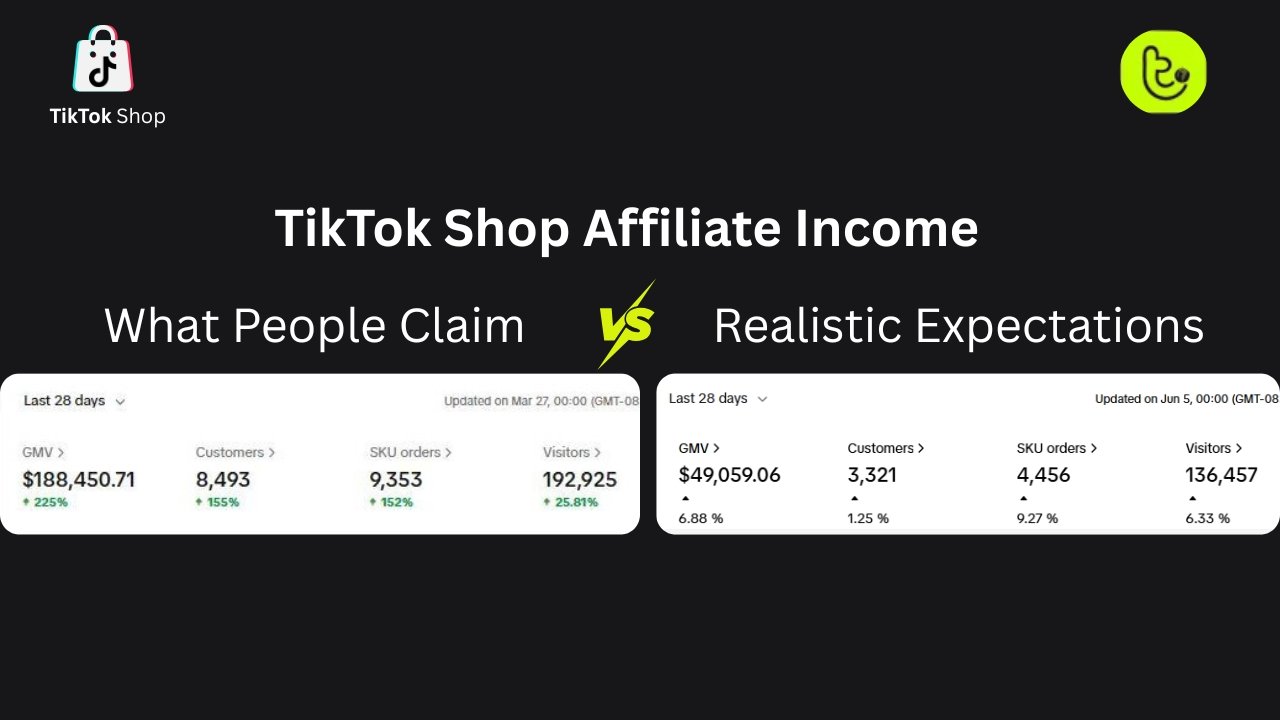
What People Claim vs What Actually Happens
To understand this properly, it helps to look at what is shown publicly compared to what usually happens behind the scenes.
Viral Income Screenshots Explained
A single viral day can produce a screenshot that looks like a monthly income, but it’s rarely repeatable. These spikes also tend to omit context like ad spend behind the content or boosted posts that inflated reach artificially.
Misleading “Success Stories”
Short-term wins are often shared without follow-up, creating the impression of sustained results. Platforms reward dramatic numbers, not the full picture, so selective reporting is common even when not intentionally misleading.
Reality check: claimed vs typical
| What’s Often Claimed | What Typically Happens |
|---|---|
| A viral video guarantees ongoing income | One strong video rarely repeats without consistent testing and posting |
| High views translate directly into high earnings | Views don’t equal sales; conversion rate is what determines actual income |
| A screenshot reflects monthly earnings | Screenshots usually capture a single spike, not a sustained monthly average |
What Sellers and Affiliates Actually Say
When you look at discussions in affiliate communities, a very different picture appears compared to the highlight-style income posts often shared on social media. Many sellers and affiliates talk about strong view counts that do not translate into sales, commissions being reduced by returns, and earnings changing suddenly due to algorithm updates.
Common discussion themes from real conversations
Across these communities, certain questions come up repeatedly. These are not one-off cases, but ongoing concerns shared by many affiliates trying to understand why performance does not match expectations.
These topics are often discussed in threads such as:
- Why am I getting views but no sales?
- What am I doing wrong? Tik tok shop affiliate!!
- Are people really making crazy life-changing money on TikTok Shop?
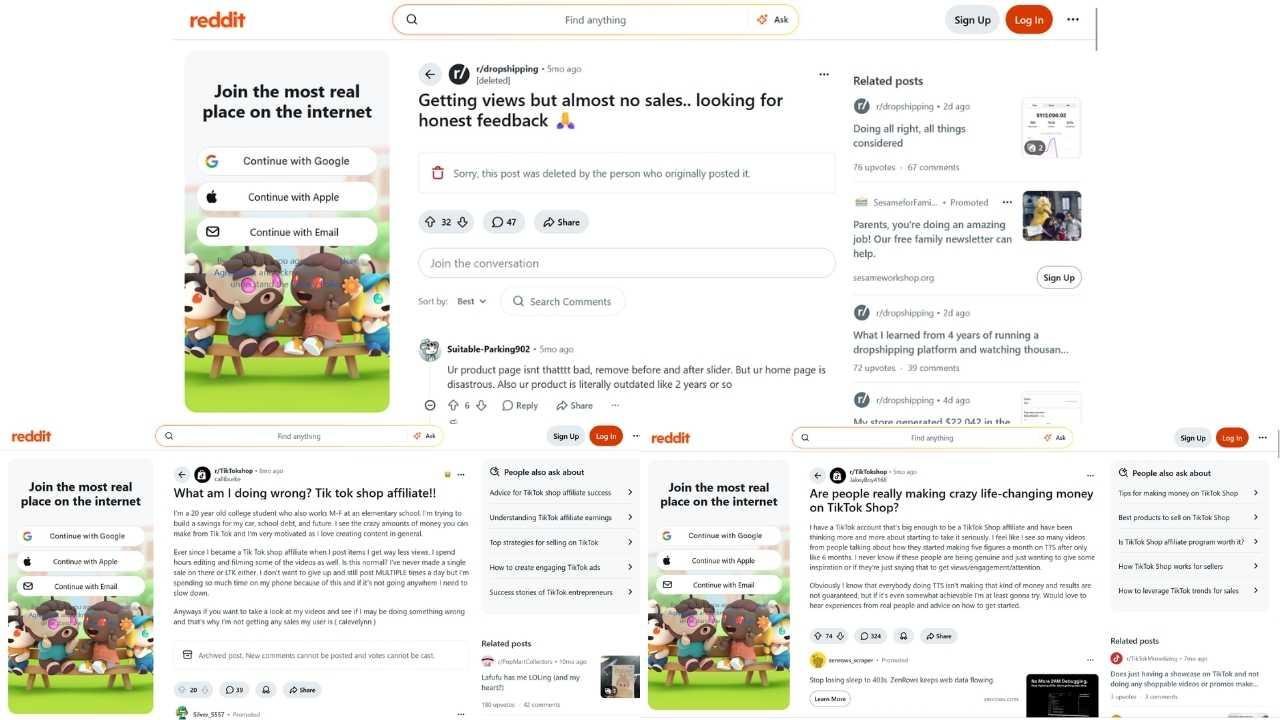
A clear pattern shows up across most discussions. Results tend to improve gradually rather than instantly, and many affiliates emphasize that audience trust and consistent content matter more than chasing short-term trends.
If you want to know the practical reasons behind why you are getting views but no sales, take a look at this blog.
Step-by-Step Guide to Building Real TikTok Shop Affiliate Income
Once you understand how earnings actually work, the next step is building a simple system that can turn that knowledge into consistent results.
- Choose the right niche. Buyer-intent niches like beauty, gadgets, and home tools tend to convert more reliably than novelty or impulse categories.
- Select products strategically. Prioritize products with a track record of converting well over those with the highest commission rate, and test multiple products before committing to one.
- Create conversion-focused content. A problem-to-solution format, paired with honest reviews rather than hype-driven framing, tends to build more durable trust with viewers.
- Build a posting consistency strategy. A daily posting rhythm, combined with close tracking of what actually converts, replaces guesswork with a repeatable system over time.
- Optimize based on data. Monitor the gap between clicks and completed sales, and drop products that consistently underperform rather than continuing to post about them out of habit.
Viral Claims vs Real Affiliate Performance
To understand affiliate income clearly, it helps to compare both sides so you can see what drives short-term spikes versus steady long-term results.
- Income structure comparison
Viral claims often highlight sudden earnings spikes without showing consistency over time, while real affiliate performance usually builds gradually and becomes more stable after repeated testing and content refinement. - Effort vs outcome comparison
Occasionally, a low-effort video can outperform expectations, but repeatable income typically comes from consistent posting, testing different formats, and refining what actually converts viewers into buyers. - Risk factors often ignored
Refunds, product stock issues, and account limitations can reduce actual earnings, even when views and clicks look strong. These factors are often missing from publicly shared “success” examples.
Where Most Affiliates Go Wrong
Most affiliates struggle not because the platform is broken, but because they approach it without a clear system for what actually drives sales.
- Chasing trending products instead of ones that actually convert for their audience
- Posting content without building genuine audience trust first
- Skipping data tracking, which makes it impossible to know what’s actually working
- Over-relying on a single viral video instead of building a repeatable system
How Tiksly Helps TikTok Shop Affiliates Increase Sales
As a TikTok Shop official creative partner, Tiksly focuses on structured affiliate growth systems rather than one-off viral attempts, combining data-backed content strategy with creative optimization aimed at improving conversion rates.
Tiksly Process Overview
A structured system removes guesswork from the process and replaces it with clear, repeatable steps that guide every stage of growth.
- Account and niche analysis
The process begins by reviewing your account performance, content history, and audience behavior. This helps identify where your current traction is coming from and which niche direction has the highest potential for conversions. - Product and market selection
Next comes selecting products based on real demand signals, conversion potential, and audience fit. Instead of random product testing, this step focuses on narrowing down items that already show strong buying intent within your niche. - Creative content scripting and planning
Content is planned around clear hooks, problem framing, and solution-driven storytelling. Each script is designed to guide viewers from attention to product interest without relying on hype or exaggerated claims. - Performance tracking and optimization
Every post is tracked based on key signals like watch time, clicks, and conversions. Underperforming content is adjusted or removed, while strong performers are studied to understand what is working. - Scaling winning content formats
Once patterns are identified, successful content styles are repeated and expanded. This helps build consistency instead of depending on one-off viral posts.
Why this approach improves income stability
Removing guesswork from product selection, testing creatives before scaling them, and building consistent posting systems all contribute to steadier income than chasing isolated viral moments.
How sellers benefit
Sellers working with structured affiliate systems typically see better product visibility, more consistent affiliate performance, and growth built on a repeatable process rather than random posting.
Conclusion
TikTok Shop affiliate income is real, but it is far from consistent or predictable. Most creators do not see instant results. Instead, growth usually happens slowly as you refine your product choices, improve content quality, and build trust with your audience over time.
The difference between struggling and scaling often comes down to consistency, tracking what actually converts, and avoiding the trap of chasing short-lived trends that do not produce repeatable income.
Tiksly’s structured approach helps affiliates turn scattered efforts into a clearer system focused on product selection, content performance, and scalable results.
If you want a clearer direction for your account and a practical strategy for improving conversions, you can book a free 1:1 consultation with Tiksly to review your current setup and next steps.
FAQs
How much do TikTok Shop affiliates really make per month?
It depends heavily on experience level and product selection. Beginners often earn little to nothing in the first few months, while consistent intermediate creators build a modest but more reliable monthly income.
Is TikTok Shop affiliate income reliable or unpredictable?
It’s inherently variable, shaped by algorithm reach, seasonal demand, and product saturation, so even experienced affiliates see month-to-month swings.
Do you need followers to earn on TikTok Shop’s affiliate program?
A large following helps but isn’t required. Product selection, content quality, and conversion rate often matter more than follower count.
Why do TikTok Shop affiliate earnings vary so much?
Income is tied directly to sales, not views, so factors like product saturation, algorithm shifts, and seasonal demand all cause natural fluctuation.
Can beginners actually make money with TikTok Shop affiliates?
Yes, though usually not immediately. The first few months tend to function as a learning phase before income becomes more consistent.