 Ayesha Khan
If your TikTok Shop videos aren’t converting, your creator brief might be the problem. A clear UGC Creator Brief for TikTok Shop helps creators understand your product, audience, messaging, and goals before filming. That means fewer revisions, stronger videos, and higher conversion rates.
In this guide, you’ll learn exactly what to include in your brief, what to avoid, and how to use a proven template that helps creators produce content that’s ready to sell.
What Is a UGC Creator Brief for TikTok Shop?
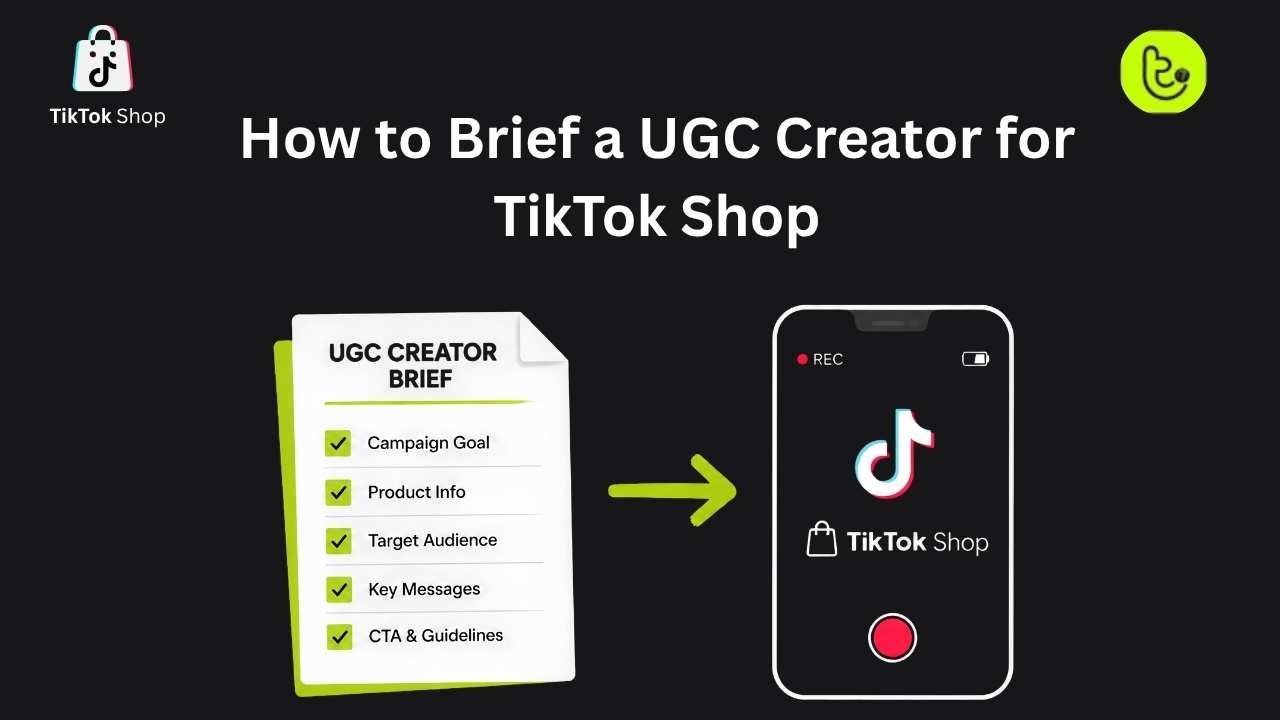
A UGC creator brief is a short document that tells a creator what you need before they pick up a phone and start filming. It covers the product, the audience, the message, and what “good” looks like when the video is done. Think of it as the difference between a creator guessing at your brand and a creator working from the same page as your marketing team.
What a creator brief actually does
The brief does the thinking up front so the creator doesn’t have to guess it on camera. It hands over the product facts, the customer’s problem, and the tone you’re going for, so the creator can spend their energy on the part they’re actually good at: making the video feel real.
Why TikTok Shop campaigns need a different approach
TikTok Shop content isn’t a commercial. It’s a for-you-page video that happens to have a shopping cart attached. Viewers scroll fast and skip anything that smells like an ad, so the brief has to protect the native, unscripted feel of the platform while still doing its job of guiding the creator toward a sale.
How a TikTok Shop content brief differs from influencer campaign briefs
Influencer briefs are usually built around reach, brand awareness, and a single polished post. A TikTok Shop brief is built around conversion: it needs a hook, a clear path to the product link, and a call-to-action that gets someone to tap “buy” mid-scroll. The creator isn’t just representing your brand, they’re acting as your sales floor.
Why Every TikTok Shop Brand Needs a UGC Creator Brief
A well-written UGC Creator Brief for TikTok Shop gives creators the information they need to produce content that aligns with your brand while still feeling authentic to their audience. Here are the biggest reasons every TikTok Shop brand should create a clear and detailed brief before launching a campaign.
Reduces misunderstandings
Without a brief, creators fill in the gaps themselves, and those gaps rarely line up with what your brand actually needs. A brief closes that gap before a single frame is shot.
Speeds up content production
Creators who know exactly what’s expected can film in one session instead of re-shooting after a rejected draft. That’s fewer round trips between you and the creator, and content that hits your calendar on time.
Improves conversion-focused storytelling
A good brief tells the creator what problem the product solves, not just what the product is. That shift, from “here’s a feature” to “here’s a problem you’ve had”, is what turns a video into a sale.
Keeps your brand consistent across multiple creators
If you’re running campaigns with five, ten, or fifty creators at once, a brief is what keeps your claims, tone, and required talking points consistent, even when the creators themselves look and sound nothing alike.
With the right creators and a clear briefing process, you can scale UGC content while maintaining a consistent brand message across every video.
Makes campaign performance easier to measure
When every creator is working from the same objective and the same success metrics, it’s much easier to tell which hooks, angles, or creators are actually driving sales.
What to Include in a UGC Creator Brief for TikTok Shop
A strong UGC Creator Brief for TikTok Shop should answer every question a creator might have before they start filming. The more clarity you provide upfront, the easier it is for creators to produce authentic, high-converting content with fewer revisions. Here’s what every effective brief should include.
Campaign objective
Start with one primary goal. Trying to chase sales, awareness, and a product launch in the same video usually means the video does none of them well.
- Sales
- Product awareness
- Product launches
- Seasonal campaigns
Product overview
Give the creator the facts they need without burying them in a spec sheet.
- Key features
- Main benefits
- Unique selling points
- Customer pain points solved
Target audience
The more specific this is, the more natural the video will sound.
- Age
- Interests
- Buying intent
- Common objections
Brand voice and personality
Describe your brand in a few adjectives and, if you have them, a couple of example videos or posts that capture the tone. This gives creators a reference point without asking them to sound like someone else.
Key messages creators should communicate
List the two or three points that should come through no matter how the creator chooses to say them. This is different from a script, it’s the destination, not the route.
Product claims and compliance guidelines
Spell out anything the creator legally cannot say, especially for regulated categories like supplements, skincare, or finance-adjacent products. This section protects both your brand and the creator.
Required talking points
Any specific ingredient, feature, or comparison you need mentioned should be listed clearly so it isn’t left out of the final cut.
Mandatory shots and product demonstrations
If you need a specific unboxing angle, a before-and-after, or a close-up of the product in use, say so here.
Hook ideas
Give two or three example hooks or hook styles (a bold claim, a relatable problem, a “POV” format) to spark ideas, not to be read word for word.
Call-to-action requirements
Tell the creator exactly how you want them to point viewers to the product: verbally, on-screen text, or both, and where in the video it should land.
Video specifications
- Length
- Resolution
- Orientation
- Captions
- Music
- Delivery format
Timeline and deadlines
Give a draft deadline and a final delivery deadline, with time built in for one round of revisions.
Deliverables checklist
A simple list of what you expect back: number of videos, file formats, and any raw footage you need in addition to the edited version.
Step-by-Step Guide to Writing a TikTok Shop Content Brief
Follow these steps to create a brief that sets clear expectations while giving creators the flexibility to produce authentic, high-performing content.
Step 1: Define one clear campaign goal
Before you write anything else, decide what this specific batch of content needs to accomplish. Everything in the brief should support that one goal.
Step 2: Understand your customer before writing
Pull from reviews, customer service tickets, or comments to understand the actual language your customers use to describe their problem. That language is often more useful to a creator than your official brand copy.
Step 3: Explain your product simply
Write the product overview the way you’d explain it to a friend, not the way you’d write it for a landing page. Creators translate simple explanations into natural dialogue much more easily than dense feature lists.
Step 4: Share examples of content you like
Two or three reference videos, even from other brands, communicate tone and pacing faster than a paragraph of description ever could.
Step 5: Give creators room to be authentic
Resist the urge to script every line. Give the required talking points and the key message, then let the creator decide how to say it in their own voice.
Step 6: Explain what success looks like
Tell the creator what a strong video does, stop the scroll in the first second, clearly shows the product in use, ends with a clear next step, so they’re filming toward an outcome, not just a checklist.
Step 7: Review the brief before sending
Read it once as if you were the creator and nothing else. If anything is unclear or missing, fix it before it becomes a round of revisions.
UGC Creator Brief Template for TikTok Shop
Use this as a starting structure and adjust the level of detail to your product category.
Campaign overview
Objective, timeline, number of creators, and number of videos needed.
Brand background
A short paragraph on who you are and what you sell.
Product information
Key features, benefits, and the problem it solves.
Target audience
Demographics, interests, and buying intent.
Creator instructions
Tone, pacing, and any format preferences (POV, tutorial, unboxing, testimonial).
Required talking points
The two or three points that must be included.
Content dos
What you want to see more of.
Content don’ts
Claims, phrases, or shots to avoid.
Video requirements
Length, orientation, resolution, and captions.
Submission timeline
Draft due date and final delivery date.
Approval process
Who reviews the content and how feedback will be shared.
Success metrics
What you’ll use to judge whether the content worked: views, click-through, conversions, or a combination.
Example of a Completed TikTok Shop UGC Creator Brief
Seeing a completed UGC Creator Brief for TikTok Shop makes it easier to understand how all the different elements fit together. The example below shows how a clear objective, concise instructions, and creative flexibility can help a creator produce engaging content that supports your campaign goals.
Example campaign
A skincare brand launching a new moisturizer briefs a creator to film a “get ready with me” video showing the product as part of a morning routine, with the goal of driving first-time purchases through the TikTok Shop link.
Why this example works
The brief gives the creator a format (GRWM) that already performs well on TikTok, a single clear objective (first-time purchases), and just enough product detail to explain why the moisturizer fits into that routine, without dictating every line of dialogue.
Lessons you can apply to your own campaigns
Anchor the brief to a content format that already works on the platform, keep the objective singular, and trust the creator to fill in the personality.
Common Mistakes That Hurt TikTok Shop UGC Performance
A clear brief can set creators up for success, but the way you write and structure that brief matters. Many TikTok Shop brands unintentionally limit their results by making common briefing mistakes that affect creativity, authenticity, and overall content performance.
Avoid these issues to get better results from your creator partnerships. For brands looking to streamline their campaigns and produce engaging videos, investing in professional Content Creation Services can help turn creative ideas into content that connects with audiences and drives results
Writing overly detailed scripts
Word-for-word scripts tend to sound stiff on camera, and stiff content gets scrolled past.
Giving unclear campaign goals
When a creator doesn’t know if they’re building awareness or driving a sale, the video often does a mediocre job of both.
Ignoring the creator’s style
Creators are chosen because their audience trusts them. Overriding their natural style with brand-speak undercuts the reason you hired them.
Forgetting compliance requirements
Missing compliance guidance can mean a creator makes a claim you can’t legally support, which becomes your problem, not theirs.
Sending incomplete product information
Vague product details lead to vague videos, and vague videos don’t convert.
Too many mandatory requirements
A brief with fifteen non-negotiables leaves no room for the creator to make the content feel native, which is the entire point of UGC.
No performance expectations
If a creator doesn’t know what success looks like, you have no fair way to evaluate whether the content delivered.
Brand-Controlled Brief vs Creator-Led Brief
Which approach works better for TikTok Shop?
Most TikTok Shop brands get better results from a creator-led brief, since the platform rewards content that doesn’t feel produced. Regulated categories are the exception, where a brand-controlled brief protects against compliance risk.
Finding the right balance
The strongest briefs borrow from both: firm on claims and required talking points, loose on everything else.
Best Practices for Briefing a TikTok Shop UGC Creator
A well-structured TikTok Shop UGC Creator Brief gives creators direction, but the best results come from how you approach the collaboration. These best practices help you create briefs that support creativity, maintain authenticity, and guide creators toward content that connects with viewers and drives action.
Focus on customer problems before product features
Start every brief with the problem the product solves. Features matter, but they only land once the viewer recognizes the problem as their own.
Encourage authentic storytelling
Ask creators to talk about the product the way they’d tell a friend, not the way they’d read a press release.
Let creators use their own voice
Editing a creator’s natural phrasing to sound more “on brand” is usually a step backward for performance.
Prioritize hooks that stop scrolling
Spend more brief real estate on the first three seconds than on anything else. If the hook doesn’t work, nothing after it matters.
Keep briefs simple and easy to follow
A one-page brief that gets read beats a five-page brief that gets skimmed.
Review briefs after every campaign and improve them
Treat the brief itself as a living document. Update it based on which sections creators ask the most follow-up questions about.
How Tiksly Helps Brands Create Better TikTok Shop UGC Campaigns
A great brief sets creators up to succeed, but it’s one piece of a larger system that includes finding the right creators, testing hooks, and knowing which content to scale once it starts converting.
How Tiksly supports brands as a TikTok Shop Official Creative Partner
Tiksly, a TikTok Shop Official Creative Partner, works alongside brands across the full lifecycle of TikTok Shop content, including:
- Creator sourcing
- Campaign planning
- Creator matching
- Brief development
- UGC strategy
- Creative testing
- Performance optimization
- Content scaling
- Compliance guidance
- End-to-end campaign management
Who benefits most from working with Tiksly
- New TikTok Shop sellers
- Established ecommerce brands
- Agencies
- International brands entering TikTok Shop
Checklist Before Sending Your UGC Creator Brief
- Campaign goal defined
- Product benefits explained
- Audience identified
- Deliverables listed
- Deadlines included
- Required shots specified
- Brand guidelines attached
- Compliance requirements included
- Success metrics explained
- Contact person assigned
Conclusion
A strong UGC Creator Brief for TikTok Shop helps creators understand your goals while keeping content authentic and engaging. As campaigns grow, refining briefs and managing creators can become challenging.
Tiksly, a TikTok Shop Official Creative Partner, helps brands with brief development, creator sourcing, testing, and scaling. Book a free 1:1 consultation with Tiksly experts to create a strategy that drives better TikTok Shop results.
Frequently Asked Questions
How do you write a UGC creator brief for TikTok Shop?
Start with a single campaign objective, then add product details, audience information, required talking points, and video specifications. Keep it specific enough to guide the creator, but loose enough to let their personality come through.
What should a TikTok Shop content brief include?
At minimum, it should cover the campaign objective, product overview, target audience, key messages, compliance guidelines, video specifications, and deadlines.
How detailed should a creator brief be?
Detailed enough that a creator never has to guess your objective, product facts, or required talking points, but not so scripted that it removes their natural voice.
Should you script every TikTok Shop video?
No. Full scripts tend to produce stiff, ad-like content. Provide talking points and a hook idea, then let the creator decide how to deliver them.
How can brands improve UGC performance on TikTok Shop?
Focus briefs on customer problems rather than product specs, give creators creative freedom within clear guardrails, and review performance after each campaign to refine the brief.
What’s the difference between a TikTok Shop content brief and an influencer brief?
A TikTok Shop brief is built around driving conversions through a single video and product link. An influencer brief is typically built around reach and brand awareness across a broader content partnership.
Can one UGC creator template work for multiple campaigns?
Yes, as long as you update the campaign objective, product information, and required talking points for each new campaign while keeping the overall structure the same.
How do you measure whether a creator brief was successful?
Compare the content against the success metrics defined in the brief, whether that’s views, click-through rate, or actual conversions, and use what you learn to refine the next brief.