 Ayesha Khan
Here’s the uncomfortable truth nobody tells you when you sign up for TikTok Shop: most sellers quit before they ever figure out how the platform actually works.
Not because the platform is broken. Not because their products were bad. They quit because they walked in expecting TikTok Shop to behave like Amazon, list a product, run an ad, and watch orders roll in. That’s not how this works, and the data is blunt about it.
Over 55% of all registered TikTok shops are inactive at any given time, and fewer than 10% of new sellers survive their first year. The sellers who make it aren’t luckier. They understand the rules of a different game.
This blog breaks down every reason sellers quit in those critical 90 days, pain point by pain point, with real community voices, and what actually separates the ones who stay.
The 90-Day Reality Check: What the Data Actually Says
Before we get into why sellers quit, you need to see the shape of the problem. Because if you’re sitting there with a week of zero sales thinking you’re the only one, you’re not and the reasons are systemic, not personal.
70% of all TikTok shops generate less than $2,000 per month in gross sales. Only 12% consistently clear $10,000 monthly. At the very top, a handful of breakout sellers capture most of the platform’s GMV and the gap between them and everyone else is enormous.
TikTok Shop grew 120% year over year. Disney, Ralph Lauren, and Hershey’s are now selling on it. US GMV is projected at $23.4 billion in 2026. The growth story and the seller failure rate are both real, they’re just telling you different things. The platform works. The default approach most sellers take doesn’t.
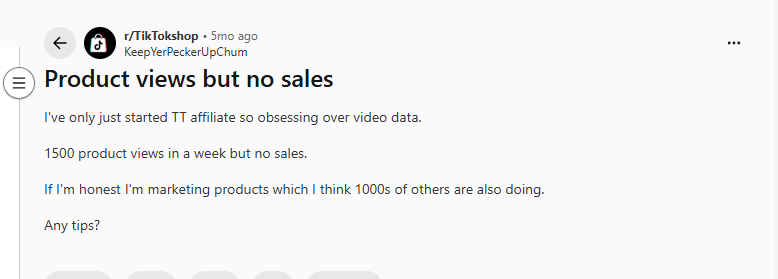
For most new sellers, the first 90 days look like this: post a few product videos, get 200–400 views, make zero sales, assume it’s the product, list something new, repeat. By week eight they’re posting less. By week twelve they’ve stopped. The platform never got enough signal to push them, and they never understood why.
The Real Reasons TikTok Shop Sellers Quit
These aren’t abstract strategic mistakes. These are the exact pain points sellers describe when they talk about giving up on Reddit, in forums, and in DMs to agencies who hear the same story on repeat.
They Treat TikTok Like a Search Engine, Not a Discovery Platform
This is the root cause underneath almost every other failure. On Amazon, customers arrive with intent, they’re already searching for what they want, and your job is to be visible at the moment they search. On TikTok, customers arrive for entertainment. There is no pre-existing intent. You have to create it.
Sellers who still treat TikTok like a trend machine usually waste creator budget, chase vanity views, and misread what the platform is actually rewarding. A product listing with great photos and a solid description is invisible here. The discovery engine doesn’t care. It cares about content signals, watch time, saves, shares, add-to-cart taps.
So sellers post a product slideshow. They get 300 views. Zero add-to-carts. They try a different product. Same result. By day 60, they’ve concluded TikTok Shop doesn’t work, when what actually happened is they tried to capture intent that doesn’t exist on a platform that requires content to manufacture it first.
Content Volume Burns Them Out Before They Find Their Groove
The second shock is operational. TikTok Shop demands volume. Not one polished brand video a week, 3 to 5 short-form product videos per week, with strong hooks, value-first framing, and niche targeting. That’s before you factor in live shopping sessions, which the platform increasingly rewards.
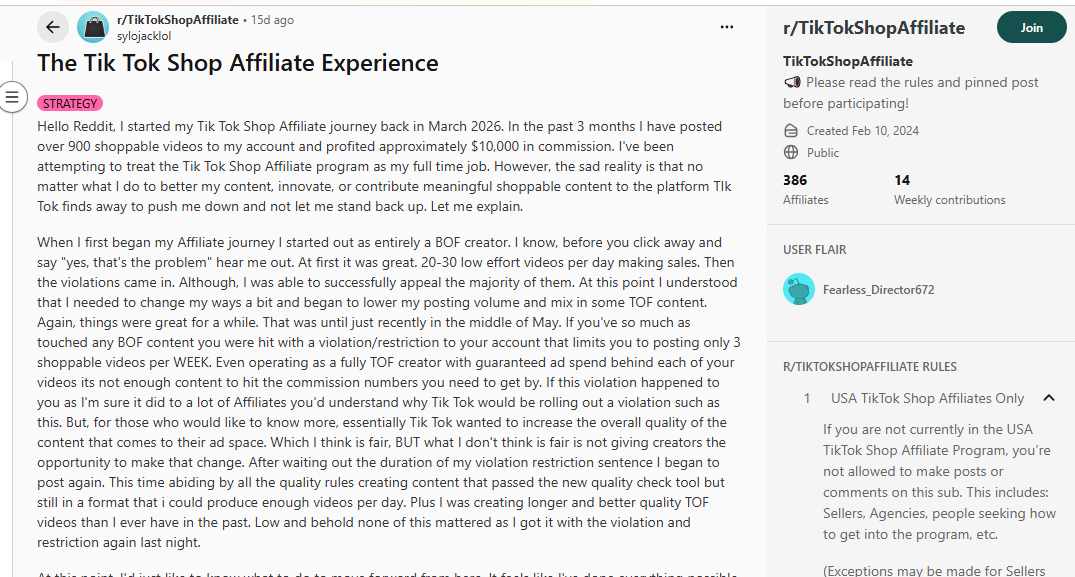
A third of marketers believe TikTok is the hardest platform to crack right now. A TikTok Shop affiliate shared that they posted more than 900 shoppable videos in three months while trying to make the platform their full-time income. Despite the volume, they still struggled with visibility and performance fluctuations.
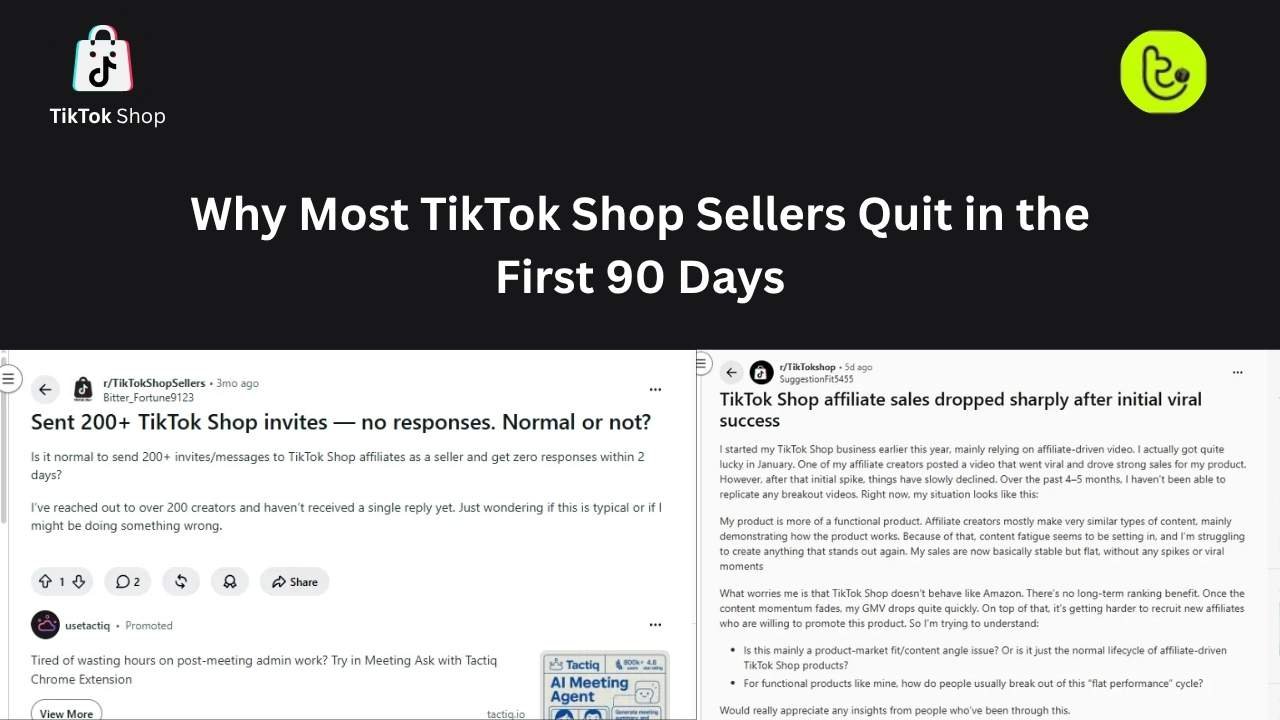
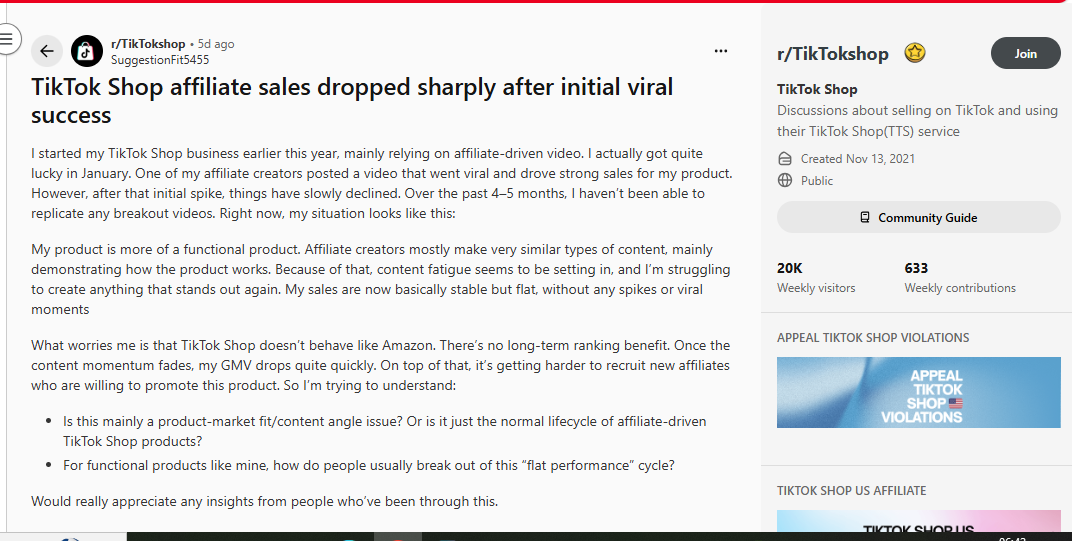
Another seller described how their sales dropped after an early viral win because they couldn’t keep producing fresh content angles. They explained that affiliate creators kept making similar demonstration videos, leading to content fatigue and stagnant sales.
The pressure to constantly publish is one reason many new sellers quit before reaching profitability. Several sellers report that success requires ongoing testing of hooks, formats, creators, and product angles rather than relying on a single viral video.
The Creator Outreach Problem
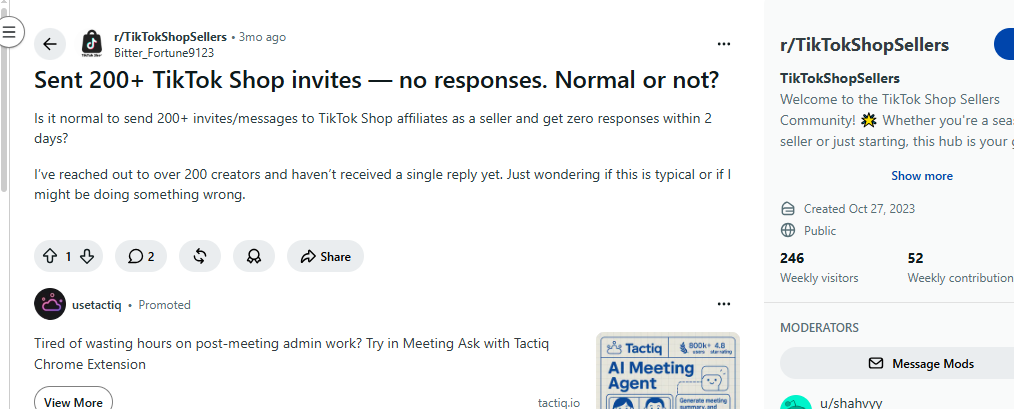
Most sellers know they need creators to drive affiliate sales. What they don’t know is how badly the default approach fails. The typical playbook: copy-paste a DM to 100–200 creators, offer free products, hope someone posts. The result: 3 replies, 1 post, 200 views, 0 sales.
TikTok Shop rewards relationships with right creators who genuinely like the product. Performance-based affiliate commissions in the 14–17% range are the model, not upfront payments to large accounts. But even that model only works when you’re reaching creators whose audiences have actually purchased in your category before.
Creators receive dozens of pitches daily. If your offer doesn’t immediately align with their audience’s buying behavior, they ignore it. Low affiliate acceptance rates aren’t a sign that creators are difficult, they’re a sign your outreach isn’t targeted. Sellers who never crack creator partnerships are essentially invisible on a platform that runs on creator-led content.
Hidden Costs and Margin Shock
Sellers launch with excitement, then open their first settlement report. The math they thought they’d done doesn’t add up anymore.
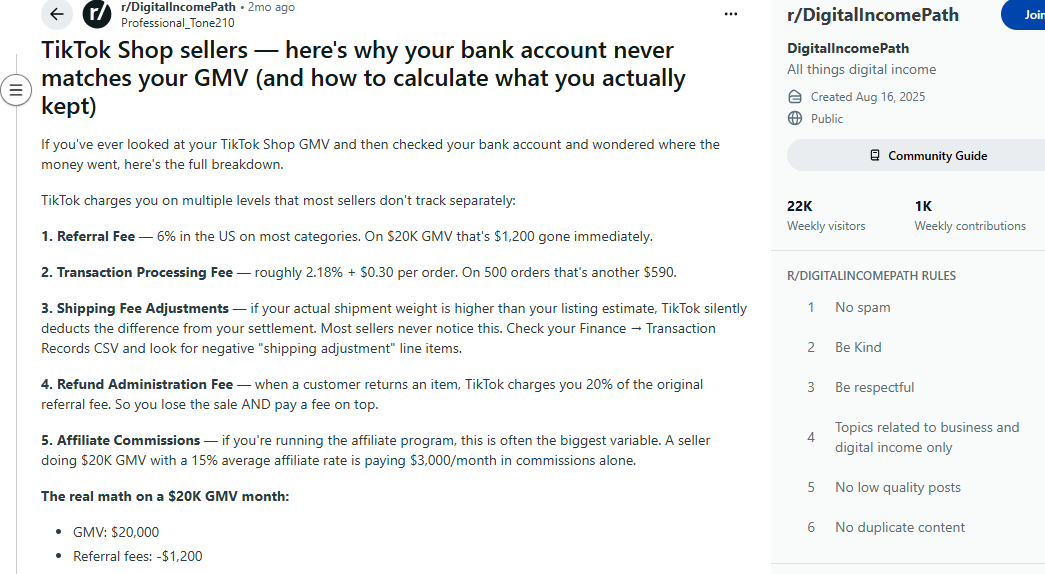
TikTok Shop’s baseline fees are 8% commission plus $0.30 per transaction. Add affiliate commissions (typically 14–17% of revenue when you’re running a proper affiliate program), Spark Ads or Shop Ads spend to stay visible, returns, refunds, and fulfillment, and on a $20 product with a $6 cost, you may be left with almost nothing.
TikTok ads fatigue much faster than on other platforms. A campaign may stay effective for only 3 to 4 weeks before creative burnout kicks in, versus months on Facebook or Instagram. That means you’re not just spending, you’re constantly refreshing creative just to hold the reach you had. Most sellers don’t model this going in, and the numbers are brutal when they finally see them.
Compliance and Policy Violations They Never Saw Coming
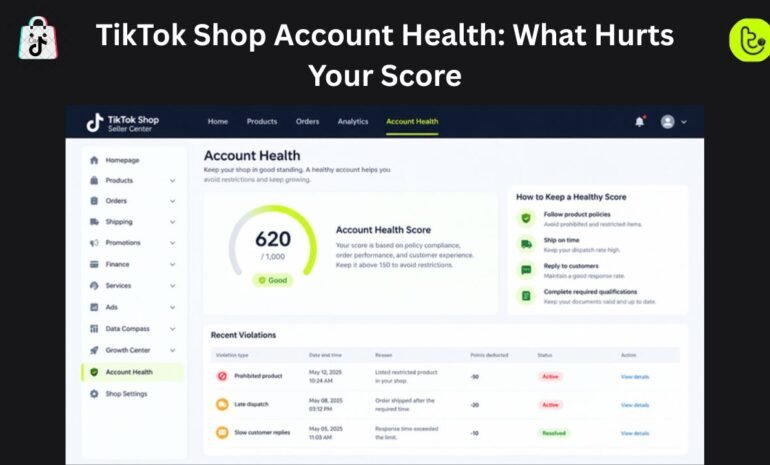
TikTok Shop’s violation system is strict in ways that new sellers genuinely don’t anticipate. It’s not just about not selling prohibited products. It’s about response times, shipping speeds, tracking accuracy, review rates, and product listing accuracy, all simultaneously.
Accumulate 12 violation points, and your ability to create new listings is suspended for a week. At 48 points, your account is permanently deactivated. Points stay on your account for 180 days. One bad quarter, late dispatches, a wave of returns, slow customer service response, can set you back for months before you even understand what happened.
Every business must maintain a Late Dispatch Rate under 4%, a Valid Tracking Rate of at least 95%, and a Seller Fault Cancellation Rate under 2.5%. These aren’t aspirational targets, they’re minimums. Miss them and you’re penalized. Most sellers don’t know these numbers exist until they’ve already violated them.
What Separates Sellers Who Stay (And It’s Not a Viral Video)
Here’s what the sellers who survive those 90 days have in common: they don’t get lucky. They build systems before they expect results.
The brands that scale well build for niche fit first instead of broad entertainment. They watch early engagement quality instead of chasing surface metrics. And they run creator programs like structured operations, with clear commission structures, targeted outreach, and continuous performance monitoring, not loose influencer campaigns they hope pan out.
They also go in with the right timeline. TikTok Shop requires patience, creator investment, inventory depth, and a genuine 60–90 day runway before consistent returns. That’s not pessimism, it’s the architecture of every brand that’s actually figured this out.
Three things survivors do differently:
- They have a content pipeline: not just “I’ll post when inspiration hits.” A calendar, a hook library, a repeatable format that generates 3–5 videos per week without burning out.
- They seed products to creators before expecting sales from their own brand account. Creator-led content primes the algorithm; your brand account amplifies it.
- They build margin models with every TikTok fee, affiliate commission, and ad cost baked in before they list a single product. If the numbers don’t work on paper, they fix the product mix first.
How Tiksly Helps Sellers Survive and Scale the First 90 Days
Most of the challenges covered above have clear solutions. The issue is not effort. It is timing and access.
Content systems, creator networks, compliance understanding, and performance tracking take time to build. Many sellers run out of budget or motivation before those systems are in place.
Tiksly is a TikTok Shop official creative partner, designed to close that gap. The goal is simple: help sellers build a working TikTok Shop system from day one instead of figuring it out through trial and error.
01. Product Content Fit Audit
Before any content is created, Tiksly reviews your product through a TikTok-specific lens.
This means analyzing:
- Whether the product has natural demo potential
- How it fits short-form discovery behavior
- What angles are most likely to drive attention and conversions
A product that performs well on Amazon or Shopify does not always translate directly to TikTok. This step helps avoid wasted content production and early misalignment.
02. Creator Matching at Scale
One of the biggest bottlenecks for new sellers is creator outreach.
Instead of relying on cold messages and mass DMs, Tiksly helps match products with creators who already have proven audience interest in similar categories.
This approach focuses on:
- Relevance between creator audience and product type
- Historical purchase behavior in the niche
- Higher likelihood of content being posted and converting
The goal is not more creators. It is the right creators.
03. Content Strategy and High-Volume Production
TikTok rewards consistent content output with strong engagement signals.
Tiksly develops and produces short-form content built specifically for that environment, focusing on:
- Strong hooks in the first few seconds
- Problem-led product framing
- Clear, native-style demonstrations
Instead of polished brand ads, the focus is on content that feels natural to the platform and can be tested at scale.
04. Performance Tracking and Rapid Iteration
Content performance is continuously monitored to understand what actually drives results.
Winning formats are expanded quickly, while underperforming content is replaced without delay.
This includes:
- Hook performance analysis
- Engagement and watch-time tracking
- Conversion-driven optimization
Speed of iteration plays a direct role in scaling outcomes on TikTok Shop.
05. Compliance and Account Health Support
Many new sellers face unexpected issues with policy violations, listing restrictions, or account limitations.
Tiksly provides guidance on:
- Listing compliance
- Platform policy alignment
- Operational metrics like dispatch performance and seller scores
The goal is to reduce preventable account disruptions that often stop new sellers in the early stages.
If Your First 90 Days Did Not Go as Planned
Most sellers do not fail because their product is weak. They struggle because the system around the product is missing.
Tiksly helps rebuild that system with a structure aligned to how TikTok Shop actually operates.
The Bottom Line
The 90-day drop-off pattern is predictable. Sellers do not usually fail because of one issue. It is the combination of content inconsistency, weak creator access, unclear compliance understanding, and lack of performance tracking.
The difference between early failure and long-term growth is not luck. It is whether the seller builds a system that matches how TikTok Shop actually works.
If you are stuck in the early stage or not seeing traction, you can book a free 1:1 consultation with Tiksly to review your setup and identify what needs to change.
FAQs
Why do so many TikTok Shop sellers fail?
Most sellers struggle because they treat TikTok Shop like a traditional ecommerce platform instead of a content-driven discovery system. Without consistent content and creator support, products rarely gain enough visibility to convert.
How long does it take to make sales on TikTok Shop?
Many sellers see early traction within a few weeks of consistent posting. Stable and repeatable sales usually take one to three months, depending on content quality, niche, and creator involvement.
Is TikTok Shop still worth it in 2025 and 2026?
Yes, especially for sellers who can support content creation and creator partnerships. Sellers who rely only on product listings without content often struggle to maintain momentum.
What type of content performs best on TikTok Shop?
Content that focuses on real problems and quick demonstrations performs best. The opening seconds matter most. A strong hook will outperform high production value with weak storytelling.
Do I need followers to succeed on TikTok Shop?
No. TikTok Shop distribution is based on engagement signals rather than follower count. New accounts can still reach buyers if content performs well.
What are the actual TikTok Shop fees?
Typical costs include platform commission, affiliate payouts, and optional ads spend. Total cost often falls in the 20 to 25 percent range depending on category and strategy.