 Ayesha Khan
If you’re new to TikTok Shop and have limited capital, starting as an affiliate is usually the easier way in since you don’t need to manage inventory or shipping. If you already have products, stock, or a brand you want to grow, becoming a seller gives you more control and higher long-term profit potential.
Your choice depends on your budget, risk tolerance, content creation skills, time, and whether you already have products or a brand in place. This guide compares both paths using real seller experiences, industry insights, and practical examples so you can decide the right starting point.
Understanding the Difference Between TikTok Shop Affiliate vs Seller
TikTok Shop has created two main ways to earn and build a business on the platform. To understand which path fits better, it helps to look at how each model actually works in practice.
What Is a TikTok Shop Affiliate?
A TikTok Shop affiliate earns commissions by creating content that promotes products listed by sellers on TikTok Shop. When a viewer clicks a product link in a video or live stream and completes a purchase, the affiliate earns a percentage of the sale.
There is no inventory to manage, no orders to fulfill, and no customer service to handle. The affiliate’s only job is to create compelling content that drives conversions.
This model has attracted a large and growing creator community on TikTok, especially as the platform’s social commerce revenue has expanded significantly, with TikTok Shop reaching an estimated $15.82 billion in US sales in 2025.
Commission rates typically range from 5% to 30% depending on product category and brand agreements. Health and wellness products often offer the highest commissions, followed by beauty and personal care.
What Is a TikTok Shop Seller?
A TikTok Shop seller creates product listings, manages inventory, handles shipping and returns, and sets commission rates for affiliates.
Sellers own the brand relationship with customers and manage the full ecommerce operation.
In return, sellers keep the main portion of the revenue after platform fees, affiliate commissions, and fulfillment costs. They also build long-term brand value through customer loyalty and operational systems.
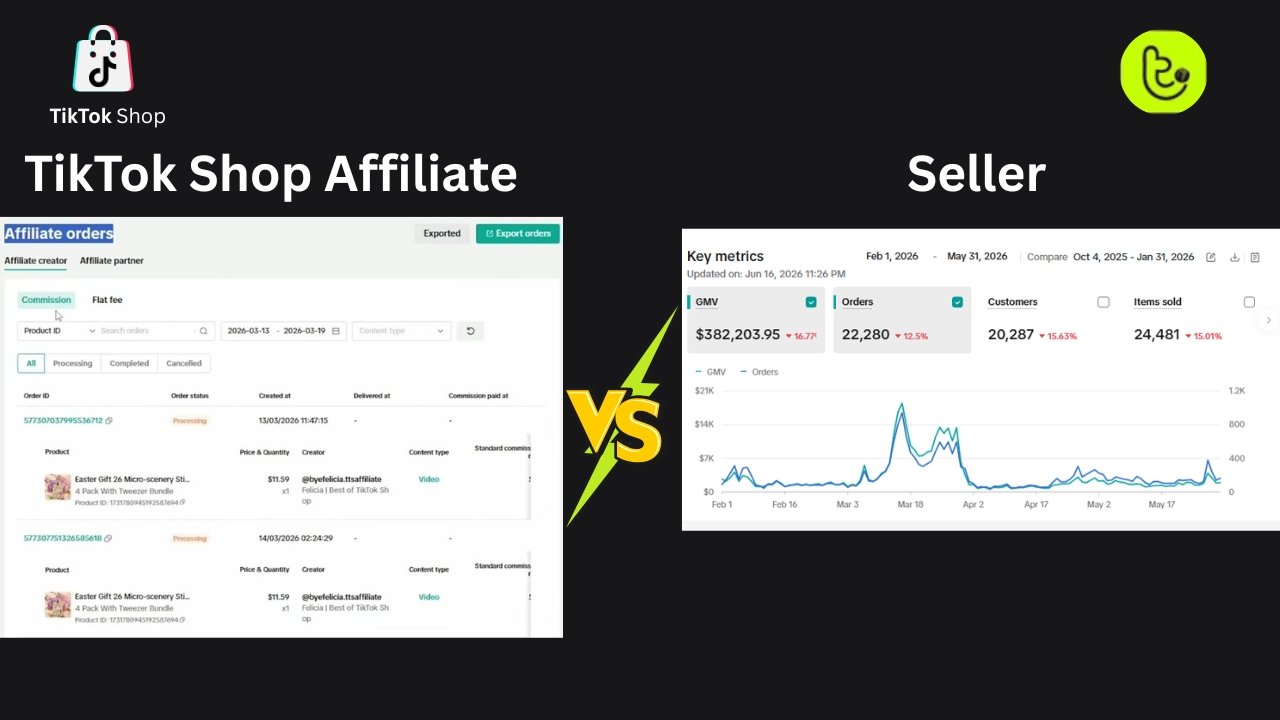
TikTok Shop Affiliate vs Seller: Side-by-Side Comparison
Affiliates build income streams. Sellers build businesses. Both paths work, but they require different resources and lead to different outcomes. Here’s a side-by-side comparison.
| Factor | Affiliate | Seller |
|---|---|---|
| Startup Cost | Low | Medium to High |
| Inventory Needed | No | Yes |
| Shipping Responsibility | No | Yes |
| Customer Service | No | Yes |
| Earnings Potential | Moderate to High | High |
| Scalability | Depends on content | Depends on systems |
| Risk Level | Lower | Higher |
| Brand Ownership | No | Yes |
When Starting as a TikTok Shop Affiliate Makes More Sense
TikTok Shop affiliate marketing is often the easier entry point for people who want to understand the platform before committing to inventory or a full ecommerce setup.
You Want Low-Risk Entry Into TikTok Shop
Starting as an affiliate lets you understand how TikTok’s algorithm surfaces product content, which categories convert best, and what content formats drive purchases before investing in inventory.
The barrier to entry is low. You need an account, content creation ability, and approval into the affiliate program after meeting platform requirements.
Platform behavior also changes frequently, so learning through affiliate activity reduces upfront risk.
You Already Create Content
If you already post on TikTok, you are better positioned to earn as an affiliate compared to starting directly as a seller.
An existing audience shortens the time to first commission, and you can test multiple product categories without committing to inventory.
Research shows that 78% of TikTok users have purchased a product after seeing it promoted by a creator.
You Want to Learn Consumer Buying Behavior Before Investing
Affiliates gain direct feedback on what products convert.
By testing multiple offers, they understand:
- What buyers click
- What content converts
- What categories perform best
Many successful sellers began as affiliates, identified winning products, and later launched their own brands based on proven demand.
When Starting as a TikTok Shop Seller Makes More Sense
The seller route fits best when you already have a product base or a clear plan to operate an ecommerce business through TikTok Shop.
You Already Have Products to Sell
If you are a manufacturer, wholesaler, or ecommerce brand, becoming a seller fits directly into your existing operations. TikTok Shop simply becomes another sales channel.
You Want Full Control Over Pricing and Margins
Affiliates earn a commission percentage set by sellers. Sellers control pricing and retain the remaining margin after fees and commissions.
You Want to Build a Brand Instead of Promoting Others
Sellers build long-term brand equity, repeat customers, and recognition. TikTok Shop sales are projected to exceed $20 billion in 2026, creating strong opportunities for established sellers.
Real Challenges Affiliates Face
As TikTok Shop continues to grow, affiliates are seeing both opportunity and pressure increase at the same time. While the earning potential is real, there are a few consistent challenges that affect performance and stability.
Declining Reach and Unpredictable Commissions
Affiliate earnings can fluctuate due to algorithm changes. Strong content performance does not always guarantee stable income over time.
Increasing Competition Among Creators
More creators are entering TikTok Shop, increasing competition for visibility and conversions. This requires consistent content output and faster trend adaptation.
Real Challenges Sellers Face
While TikTok Shop offers strong growth potential for sellers, the operational side brings its own set of challenges that can affect scaling and profitability.
Recruiting High-Quality Affiliates
New sellers often struggle to attract experienced creators due to lack of sales history and social proof.
Seller Support and Operational Issues
Common challenges include:
- Verification delays
- Fund holds
- Limited customer data access
Managing Profit Margins While Scaling
Scaling requires balancing:
- Affiliate commissions
- Fulfillment costs
- Returns
- Advertising spend
Without proper planning, revenue growth may not translate into profit.
Which Option Makes More Money Long Term?
The long-term earning potential of TikTok Shop depends on whether you prioritize content-driven income or building a structured ecommerce business.
Affiliate Earnings Potential
Affiliate income depends on content consistency and performance. High-performing creators can earn strong income, but earnings stop when content stops.
Seller Earnings Potential
Sellers benefit from higher margins and long-term business value. TikTok Shop generated $19 billion in product sales in a single quarter in 2025, with sellers capturing most of the GMV while paying commissions to creators.
Expert Perspective
Affiliates generate income through content. Sellers build business assets. Many successful participants eventually operate both models.
Step-by-Step: How to Decide Between TikTok Shop Affiliate vs Seller
Choosing between affiliate and seller depends on your current resources, goals, and how much operational responsibility you are ready to take on.
Choose Affiliate If:
- You have under $1,000 to invest
- You enjoy creating content
- You want lower risk
- You do not want fulfillment responsibilities
Choose Seller If:
- You already have products
- You want to build a brand
- You can manage operations
- You want long-term ownership
Consider Both If:
- You are building an audience
- You want creator-generated content
- You plan to scale aggressively
How Tiksly Helps TikTok Shop Sellers Increase Sales
As TikTok Shop grows, many sellers find that scaling through affiliates becomes one of the most difficult parts of the business. This is where structured creator management support becomes important.
Why Many Sellers Struggle to Scale With Affiliates
Sellers often face challenges in:
- Finding creators
- Managing outreach
- Scaling consistent affiliate performance
Tiksly’s Process as a TikTok Shop Official Creative Partner
Tiksly supports TikTok Shop sellers by handling the end-to-end affiliate growth process, helping brands build consistent creator-driven sales systems.
- Product and Offer Assessment: Evaluate product-market fit, pricing, commission structure, and creator opportunities.
- Creator Matching: Identify relevant creators based on niche and engagement quality.
- Outreach and Recruitment: Manage affiliate invitations and onboarding.
- Campaign Activation: Support product seeding and track performance.
- Scaling Winning Creators: Expand high-performing partnerships and improve efficiency.
Who Benefits Most From Tiksly?
- New TikTok Shop sellers
- Growing ecommerce brands
- Established sellers scaling affiliate programs
- Brands launching new products
Final Verdict: TikTok Shop Affiliate vs Seller
The affiliate path offers a low-risk entry point for beginners and creators testing the platform. The seller path offers stronger long-term economics and brand ownership but requires capital and operational readiness. Both approaches can work together, and many successful participants combine them for faster growth.
Book a free 1:1 consultation with Tiksly experts to explore how your TikTok Shop can build and scale a high-performing affiliate program.
FAQs
Is TikTok Shop affiliate better than being a seller?
It depends on your goals. Affiliates offer lower risk and faster entry, while sellers offer higher long-term control and ownership.
Can you be both a TikTok Shop affiliate and a seller?
Yes. Many start as affiliates and later launch their own products.
How much do TikTok Shop affiliates make?
Typically between 5% to 30% commission depending on category and product performance.
Is TikTok Shop selling worth it for beginners?
Yes, if you already have products and can manage operations.
How do TikTok Shop sellers find affiliates?
Through TikTok Shop Affiliate Center, outreach, product seeding, and partner agencies.
Should I start as an affiliate before becoming a seller?
For many beginners, yes. It helps you understand what converts before investing in inventory and operations.