
 Ayesha Khan
If you want to know how to use AI content to scale TikTok Shop sales, the short answer is this: AI helps you produce high-volume, high-conversion product videos faster than any manual process can.
Most TikTok Shop sellers run into the same ceiling, they find a product that converts, but they cannot keep up with the content demand to sustain the momentum. The creative pipeline dries up, posting becomes inconsistent, and sales plateau.
The issue is not the product and it is rarely the audience. It is the content. TikTok is a volume game, and the sellers who win are those who can consistently push tested, optimized videos at scale. AI changes that equation entirely.
In this guide, you will get a practical breakdown of how to build an AI-powered TikTok Shop content system, from product research and scripting to variation testing and performance optimization. Whether you are just starting out or managing a high-volume store, these workflows apply directly to what is working right now.
How to Use AI Content to Scale TikTok Shop Sales: Core Strategy Overview
AI supports every stage of TikTok Shop content creation. The mistake most sellers make is treating AI as a one-off tool, they use it to write a script here or generate a caption there, without ever building a repeatable system around it. The sellers who scale consistently are those who embed AI into a structured workflow.
The core logic is simple: content velocity drives sales velocity. The more high-quality, tested content you push, the faster TikTok’s algorithm finds your buyers. AI lets you compress production time so you are spending less time creating and more time optimizing what works.
The content types that perform best for TikTok Shop include:
- Product demos that show the item in real use
- UGC-style videos that feel organic, not produced
- Problem-solution clips that hook on a specific pain point
- Before-and-after transformations that show visible results
An effective AI TikTok Shop marketing strategy does not replace the creative decisions, it multiplies your ability to execute on them. Once you know what content angles work for your product, AI helps you produce ten variations of that angle in the time it used to take to produce one.
Why TikTok Shop Sellers Struggle With Content Scale
Scaling content on TikTok is not a creativity problem, it is a systems problem. The most common issues sellers report come down to the same handful of bottlenecks:
- Inconsistent posting schedules that confuse the algorithm
- Running out of fresh video ideas after the first few products
- High editing time per video that limits output
- Low conversion rates despite consistent views
- Trend fatigue and creative burnout after weeks of manual production
These are not individual failures. They are structural limitations of manual content creation when applied to a platform that rewards constant output.
To make sure your content performs reliably, many sellers also rely on TikTok Shop content creation services to build repeatable systems and improve consistency at scale.

The pattern across seller communities is consistent: content creation, not advertising, is the primary bottleneck. Many sellers overcorrect by chasing trends instead of building structured product storytelling systems. Trending audio and formats can amplify good content, but they cannot fix content that lacks a clear hook, benefit, or conversion path.
Step-by-Step Process to Use AI Content for TikTok Shop Sales
This step by step process helps turn product insights into structured content that can be easily adapted into engaging TikTok videos that drive interest and clicks.
Step 1: Product Research Using AI
Before a single script gets written, you need clarity on what makes your product worth buying. AI can help you mine existing reviews, forum discussions, and competitor content to identify the language your target buyer uses, and what problems they actually want solved.
This step involves:
- Identifying high-demand products based on trending search signals and shop data
- Clustering product benefits and use cases by theme — for example, grouping convenience benefits separately from outcome benefits
- Converting raw product features into specific content angles (“waterproof coating” becomes “I left this outside for three days in the rain”)
AI-generated research summaries give you a creative brief before you write a single word of script. You enter the product, and the output is a set of tested content directions grounded in real buyer language.
Step 2: AI Script Generation for TikTok Videos
TikTok videos live and die by their first three seconds. The hook is everything, and this is where AI script generation provides the highest immediate return for TikTok Shop sellers.
Rather than writing one script per product, use AI to generate ten to twenty hook variations across different formats:
- Problem hooks: “If your [item] keeps [problem], this is why…”
- Curiosity hooks: “Nobody told me this about [product category] until I found this”
- Social proof hooks: “I saw this all over my feed and finally caved, here’s what happened”
From there, AI completes the script structure with a benefit explanation, a demonstration setup, and a conversion CTA. The goal is not one perfect script, it is a pool of script variations you can test at volume.
Step 3: AI Video Creation and Editing Workflow
Once scripts are ready, AI tools handle the production layer. This includes auto-generated captions synced to speech, AI voiceovers in natural-sounding tones, and auto-cut editing that trims dead air and maintains TikTok-native pacing.
The key principle here is to maintain platform-native feel. Overly polished, corporate-looking videos consistently underperform on TikTok because they break the native scroll experience. AI editing tools calibrated for short-form content tend to produce outputs that retain the authentic feel buyers respond to.
A lean AI video workflow looks like this:
1. Script input from Step 2
2. AI-generated voiceover or B-roll structure
3. Auto-captioning with styled text overlays
4. Pacing adjustment for TikTok attention windows
5. Final human review before publishing
Step 4: AI Content Variation Strategy
A single product should generate multiple distinct videos, not just copies, but genuine variations that test different angles, hooks, and emotional triggers. This is where most sellers leave the biggest growth on the table.
For each product video, AI can produce variations across:
- Hook format (problem vs. curiosity vs. social proof)
- Thumbnail frame selection and text overlay style
- CTA language (“Shop now” vs. “Link in bio” vs. “Tap the bag icon”)
- Video length (15 seconds vs. 30 seconds vs. 60 seconds)
Running multiple variations simultaneously tells you which creative approach resonates with your specific audience, and that data feeds directly back into your next production batch.
Step 5: Performance Feedback Loop
AI content scales execution, but it does not automate strategy. The feedback loop is where sellers who are winning at TikTok Shop differentiate themselves.
Use TikTok’s native analytics to track:
- Watch time and average view duration (are people stopping at your hook?)
- Click-through rate on product links (is the video driving intent?)
- Add-to-cart rate (are viewers converting after clicking?)
Bring these signals back into your AI prompts. If videos with curiosity hooks are driving higher CTR, generate the next batch with curiosity-first scripts. If 30-second videos outperform 60-second ones for your product category, set that as your default format. The feedback loop is what turns an AI content system from a content factory into a conversion machine.
AI TikTok Shop Marketing Strategy That Actually Drives Sales
The sellers who struggle with AI content are the ones who use it reactively, generating a script when they need one, editing a video when they have time. The sellers who scale are the ones who batch.
Content batching means dedicating specific blocks of time to producing multiple pieces of content in one session. One product can yield more than ten content variations when you work through hook formats, video lengths, and angle variations systematically. AI makes this feasible in hours rather than days.
Beyond batching, the strongest TikTok Shop growth comes from building content funnels, three distinct content types that correspond to where your buyer is in the decision process:
Awareness videos that introduce the product to cold audiences through entertainment or education
- Problem awareness videos that speak directly to a pain point the buyer already has
- Purchase intent videos that address objections, show social proof, and drive directly to the cart
When you combine this funnel structure with an automated TikTok product content with AI production workflow, you are not just posting content, you are running a structured acquisition system on a platform that rewards exactly that kind of consistency.
Content Types That Convert on TikTok Shop
Not all content formats perform equally for commerce. Based on what consistently drives add-to-cart actions and completed purchases, these are the content types worth prioritizing:
- UGC-style reviews filmed on a phone in natural lighting, these convert because they look like real customer experiences
- Problem-solving demos that show the product solving a specific, relatable frustration
- “3 reasons why” videos that give concrete, fast reasons to buy without requiring the viewer to do research
- Myth-busting content that addresses a common objection (“I thought it would break” or “I didn’t think it would work for my hair type”)
- Comparison videos that position your product directly against alternatives or the problem it replaces
Each of these formats maps to a buyer’s psychology. UGC builds trust. Problem-solving demos create urgency. Myth-busting eliminates hesitation. When you use AI to produce all five formats for a single product, you are covering every major conversion barrier.
To further improve efficiency, you can explore automation and integration systems that connect your content creation, editing, and publishing workflow into one streamlined process.
Manual Content vs AI Content: A Direct Comparison
To understand where AI provides real leverage, it helps to compare the two approaches across the metrics that matter for TikTok Shop sellers:
One thing worth being clear about: AI does not replace your content strategy. It does not tell you which products to sell, which audiences to target, or what makes your brand distinct. What it does is remove the execution bottleneck.
Once you have a strategy, AI increases how fast and how consistently you can execute on it, and on TikTok, that consistency is what compounds into sales.
Real Seller Pain Points: What Reddit Reveals About AI Content Gaps
TikTok Shop seller communities on Reddit offer a candid picture of where creators are struggling, and where AI is either helping or being misused.
The most consistent themes from r/TikTokShop and related communities include:
Difficulty scaling winning videos, sellers find one video that converts but cannot replicate the formula consistently
Over-reliance on viral trends instead of building a stable, product-focused creative system
Lack of a structured creative process, content decisions are reactive rather than systematic
Confusion about what actually converts on TikTok Shop versus what just generates views
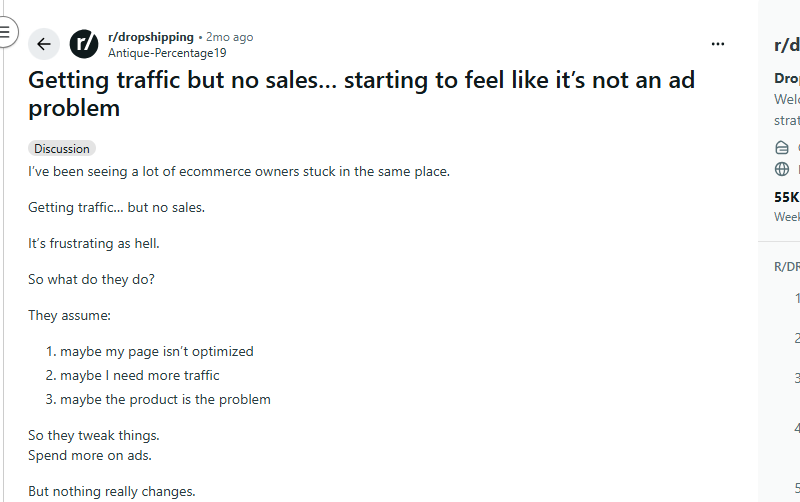
The underlying issue in most of these cases is the same: sellers are creating content without a system. AI does not solve that problem by itself, but when combined with a structured workflow, it eliminates the production friction that keeps sellers stuck in reactive mode.
How Tiksly Helps You Scale TikTok Shop Sales Using AI Content
Tiksly operates as an official TikTok Shop creative partner, which means its tools and workflows are built specifically for the platform’s commerce ecosystem, not adapted from general social media tools.
Tiksly Content Intelligence System
Tiksly’s core system is designed around one goal: turning product data into content that sells. The platform handles:
- AI-driven product content mapping that identifies which features translate into which video angles
- Automatic conversion of raw product information into structured, TikTok-optimized video scripts
- Identification of high-performing creative angles based on what is already working across similar products in your category
The workflow is built to move from product input to published video with minimal manual friction:
- Seller inputs product information and target audience context
- AI generates content ideas and script variations across multiple hook formats
- Auto-creation of TikTok-ready video assets based on selected scripts
- Multiple content variations go live simultaneously for testing
- Performance data feeds back into the system to inform the next content batch
What Makes Tiksly Different
The distinction is specificity. Most AI content tools are built for general social media, they produce content that looks good but is not calibrated for TikTok Shop’s conversion mechanics. Tiksly is built exclusively for the TikTok Shop environment, which means:
- Content is optimized for conversion, not just views, there is a meaningful difference
- The workflow is structured end-to-end from product to sale, not just script to caption
- Creative improvement is data-driven, using real performance signals rather than guesswork
Best Practices for Using AI Content in TikTok Shop
AI content works when it is treated as a system, not a shortcut. Here are the practices that separate sellers who grow from those who stall:
- Always review AI-generated scripts before publishing, AI can miss brand voice nuances, make factual errors, or produce claims that need verification
- Keep videos within TikTok’s attention windows, front-load the value and do not assume viewers will watch past fifteen seconds without a reason to stay
- Focus on one product per video, trying to feature multiple products in a single video dilutes the conversion signal and confuses the algorithm
- Test hooks aggressively, the hook is the highest-leverage element of any TikTok video, so allocate disproportionate testing resources to it
- Avoid over-automation without human validation, AI-generated content that goes live without review creates brand risk, especially for claims about product performance or ingredients
Conclusion
Scaling TikTok Shop sales depends on consistent, tested content that matches how buyers actually make decisions. AI helps remove the delays in production, speeds up content creation, and makes it easier to test different ideas at scale.
Still, strategy matters. Choosing the right products, understanding customer pain points, and reading performance data remain key to long-term success. AI simply makes it easier to execute that strategy without losing consistency.
If you want to build a structured AI content system for your TikTok Shop and improve your sales process, you can book a 1:1 consultation with Tiksly experts to get started.
FAQs
What is AI content for TikTok Shop sales?
AI content refers to the use of artificial intelligence tools to generate scripts, video structures, captions, and creative ideas for TikTok Shop product marketing. It covers everything from hook generation to automated editing workflows that produce TikTok-ready videos at scale.
How do you use AI content to scale TikTok Shop sales effectively?
The most effective approach is to build a structured workflow: use AI for product research and angle identification, generate multiple script variations per product, produce and test content variations simultaneously, then use performance data to refine your next batch. The key is treating AI as a system, not a one-off tool.
Does AI content improve TikTok Shop conversions?
Yes, when applied correctly. AI improves conversions by enabling aggressive hook testing, producing more variation for the algorithm to learn from, and maintaining posting consistency, all of which are proven drivers of TikTok Shop sales. The quality of the strategy still determines the ceiling.
What type of content works best for TikTok Shop?
UGC-style reviews, product demo videos, problem-solution clips, and myth-busting content consistently outperform highly produced ads on TikTok Shop. These formats feel native to the platform and speak directly to buyer intent without triggering the mental filters viewers apply to obvious advertising.
Can beginners use AI for TikTok Shop marketing?
Yes. AI tools significantly reduce the learning curve for new sellers by handling the most time-intensive parts of content creation — scripting, captioning, and ideation. Beginners can use AI to get more content into testing faster, which accelerates the feedback loop that teaches them what works for their specific product and audience.