 Ayesha Khan
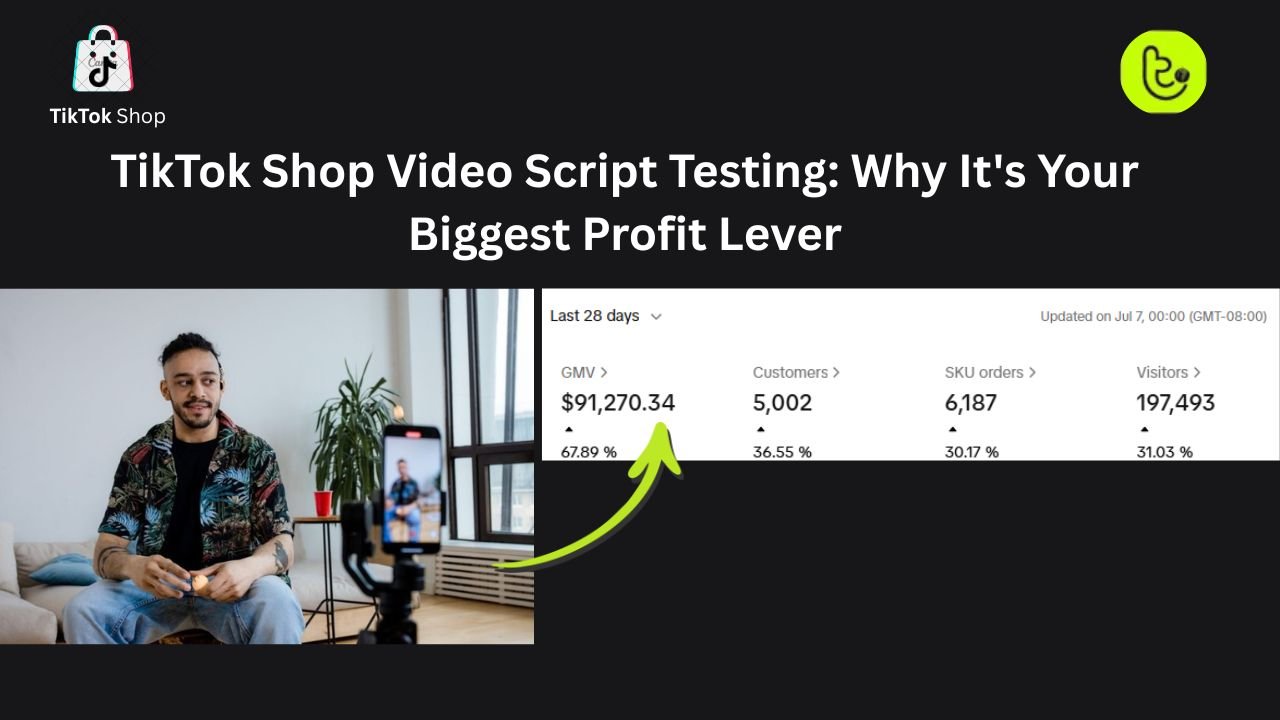
TikTok Shop video script testing is the process of systematically testing different hooks, messaging, wording, and video structures to identify which version generates the highest views, clicks, and sales.
Most sellers focus on creative visuals, but the script often has the biggest influence on performance. It shapes watch time, click through rate, conversion rate, and ultimately your GMV. Consistently testing video scripts produces more predictable and scalable growth than constantly searching for new products or increasing ad spend.
This guide explains what to test, the common script testing mistakes that quietly waste advertising budget, how high performing TikTok Shop sellers structure their experiments, and the best practices for turning winning scripts into consistent sales.
What Is TikTok Shop Video Script Testing?
TikTok Shop video script testing means isolating the written and spoken structure of a video, the hook, the problem framing, the demonstration, the offer, and the call to action, and testing variations of that structure independently from the visuals. It’s different from simply testing “a video.”
When sellers test videos as whole units, they change everything at once: the creator, the b-roll, the pacing, the music, and the script. If performance improves or drops, there’s no way to know why.
Script testing isolates the message itself, so sellers can learn exactly which words, framing, or sequencing moved the needle.
The first few seconds of a TikTok Shop video decide almost everything that follows. If the hook doesn’t earn attention immediately, none of the downstream metrics matter. That’s why script testing directly affects:
- Hook rate: how many viewers keep watching past the first 2 to 3 seconds
- Watch time: how long viewers stay engaged with the full video
- Click-through rate: how many viewers tap through to the product
- Add-to-cart rate: how many viewers act on interest
- Purchase conversion: how many viewers actually complete a purchase
Why Video Script Testing Is Your Biggest Profit Lever
Creative performance influences nearly every downstream metric in a TikTok Shop campaign. A stronger hook doesn’t just improve views, it feeds better retention data to the algorithm, which improves distribution.
A clearer problem framing keeps viewers engaged longer. A more convincing product demonstration builds trust before a customer ever reads a review. A sharper call to action closes the loop and turns interest into a completed order.
Consider the compounding effect:
- Better hooks: increase retention, which signals the algorithm to show the video to more people.
- Better problem framing: increases engagement, because viewers see themselves in the pain point.
- Better product demonstrations: increase trust, reducing the hesitation that stops a purchase.
- Better CTAs: improve conversion by giving viewers a clear, low-friction next step.
Here’s the part sellers often miss: scaling a mediocre script doesn’t fix mediocre performance, it just increases wasted spend faster.
If the underlying message isn’t converting at a small budget, pushing more dollars behind it usually amplifies the problem instead of solving it. Script testing is what earns the right to scale. To do that effectively, you need reliable content creation services that can consistently produce high quality creative variations, making it easier to test different hooks, messaging, formats, and calls to action until you find the combinations that deliver the best results.
Common TikTok Shop Seller Pain Points: Real Seller Discussions
“We’re spending more on ads but sales aren’t improving.”
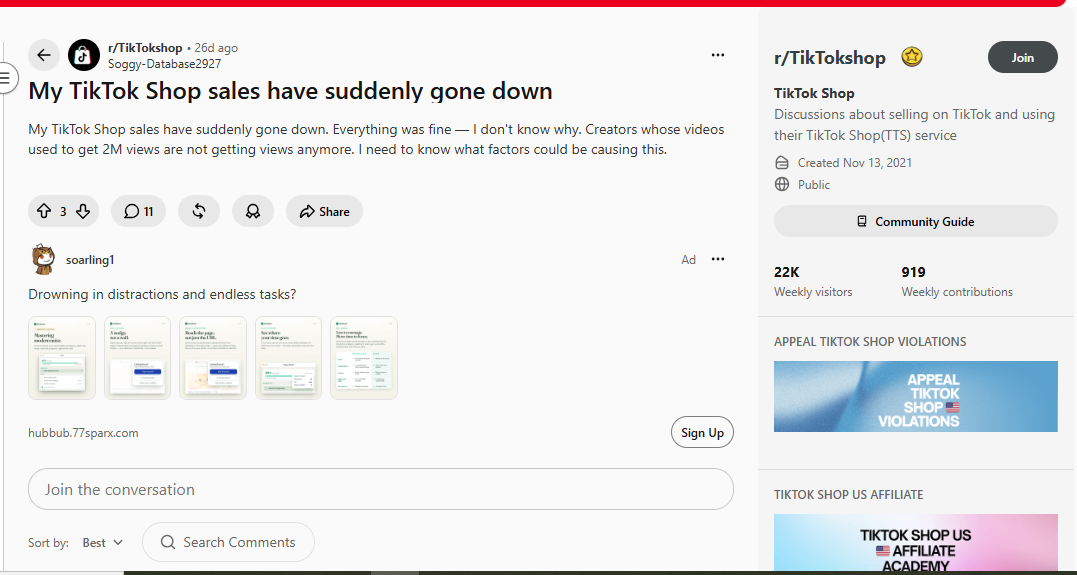
In most cases, this pattern points to weak messaging rather than a targeting or budget problem. If the script isn’t communicating value clearly in the first few seconds, no amount of additional spend will fix the drop-off. Sellers who diagnose this correctly usually find the fix in the hook and problem framing, not the media buying strategy.
“One video performs well, then everything stops working.”
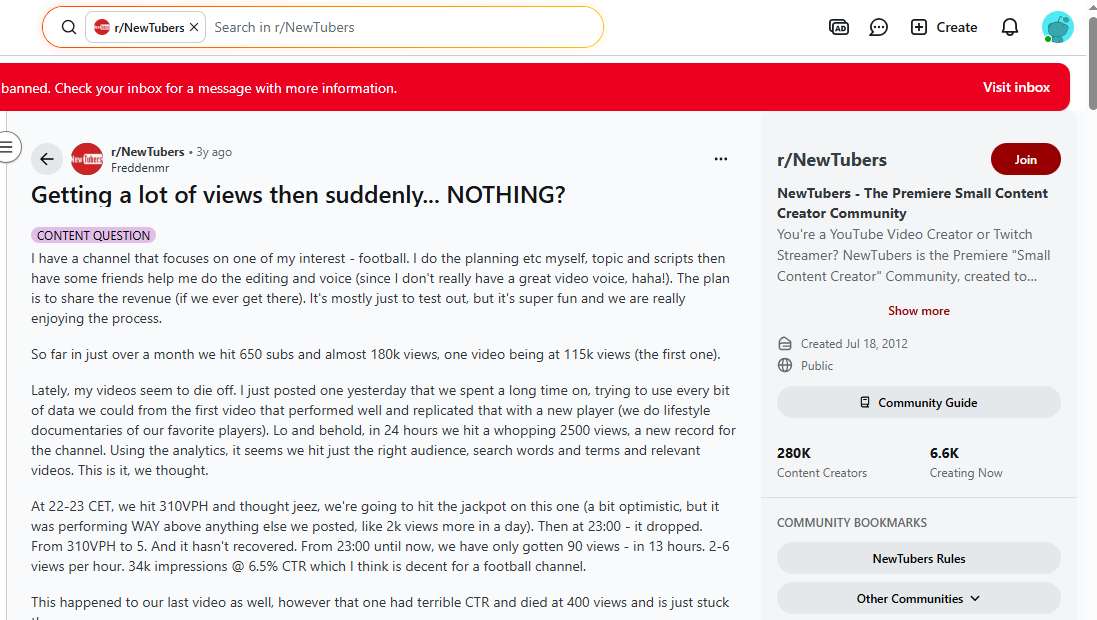
Sellers frequently describe a single viral or high-performing video that carries a campaign, until it suddenly doesn’t.
This is creative fatigue: the same audience has now seen the video enough times that it loses effectiveness, or the algorithm has exhausted the initial pool of responsive viewers.
Sellers who rely on a single winning creative are exposed every time that one video cools off. Testing multiple scripts continuously reduces dependency on any one asset and keeps a pipeline of fresh angles ready to go.
“We don’t know what part of the video actually caused the conversion.”
This pain point shows up often in threads discussing creative testing across TikTok Shop and paid social generally.
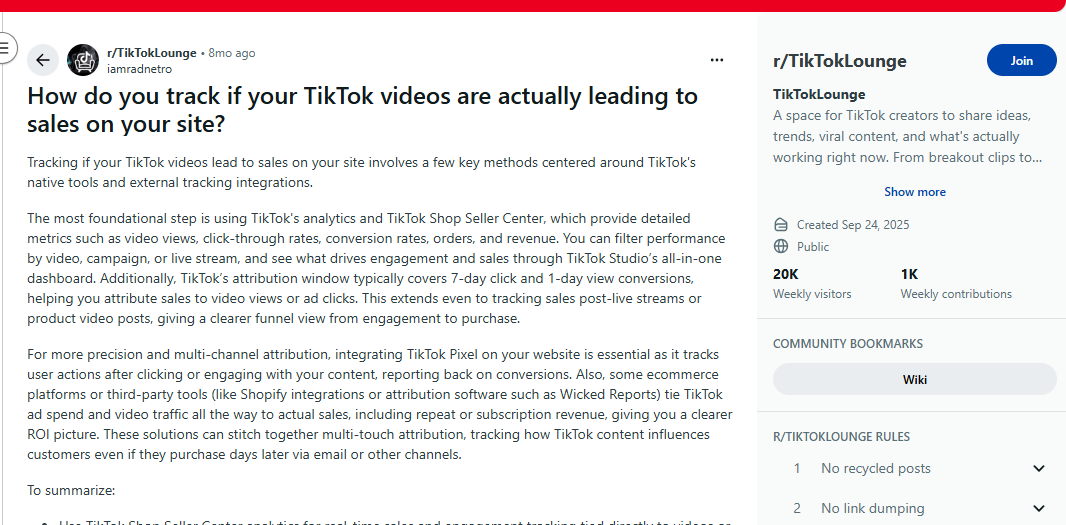
This usually comes down to testing too many variables simultaneously and lacking a structured experiment design. When the hook, visuals, creator, and offer all change between versions, there’s no reliable way to attribute the result. A disciplined, one-variable-at-a-time approach is the only way to build real knowledge from testing instead of guesswork.
What Parts of a TikTok Shop Script Should You Test?
Hook
The hook is the highest-leverage part of the entire script. Test different approaches, such as:
- Question: “Why does this happen every time you wash your hair?”
- Bold statement: “This is the only [product] I’ve repurchased three times.”
- Pain point: “If your [problem] keeps coming back, here’s why.”
- Curiosity: “I didn’t expect this to actually work.”
Problem Introduction
Test different ways to frame the customer’s pain point — direct and blunt versus relatable and story-driven, or a common frustration versus an unexpected one the viewer hasn’t considered yet.
Product Demonstration
Test different formats for showing the product in action:
- Before vs. after
- POV (point-of-view usage)
- UGC-style casual demonstration
- Lifestyle context showing the product in daily use
Social Proof
Test which form of proof builds trust fastest:
- Customer reviews
- Sales numbers (units sold, repeat purchase rate)
- Testimonials from real customers or creators
Offer Presentation
Test how the offer itself is framed:
- Discount
- Bundle
- Limited-time offer
- Free shipping
Call to Action
Small CTA wording changes can shift conversion rates. Compare:
- “Shop now”
- “Grab yours today”
- “Don’t miss today’s deal”
A Simple Process for Testing TikTok Shop Video Scripts
Follow the simple process to test TikTok Shop video scripts.
Step 1: Research customer objections. Look at reviews, comments, and customer service questions to understand what’s actually stopping people from buying.
Step 2: Write multiple hooks. Draft several distinct opening lines based on different angles — pain, curiosity, bold claims, and direct questions.
Step 3: Keep every other variable the same. Use the same creator, setting, product shots, and pacing across versions so the script is the only thing changing.
Step 4: Launch several script variations. Run the variations concurrently, or in close succession, so external factors (seasonality, platform changes) don’t skew results.
Step 5: Measure performance. Track the metrics that actually explain why a script worked or didn’t:
- Hook rate
- Watch time
- CTR
- CVR
- CPA
- ROAS
Step 6: Scale only proven winners. Once a script variation clearly outperforms the others across multiple metrics, that’s the one to scale, and the one to use as a template for the next round of testing.
What Successful TikTok Shop Sellers Do Differently
The table below shows the difference between successful and average sellers.
| Average Sellers | High-Performing Sellers |
|---|---|
| Test random videos | Test structured scripts |
| Change multiple variables | Change one variable at a time |
| Judge after one video | Analyze multiple creatives |
| Focus on production quality | Focus on messaging first |
| Guess what works | Use performance data |
How Tiksly Helps Sellers Scale Winning TikTok Shop Creatives
As an official TikTok Shop Creative Partner, Tiksly builds structured testing systems for sellers who want reliable, repeatable creative performance instead of one-off viral hits.
Step 1: Understand Your Product and Audience
Every engagement starts with product analysis, customer research, and a review of competitor creative to understand what’s already working — and where the gaps are.
Step 2: Build Multiple Script Angles
Tiksly develops a range of distinct script angles for testing, including:
- Pain-focused
- Benefit-focused
- Problem-solution
- Storytelling
- Trend-driven
Step 3: Produce Creator Videos
Each script angle is brought to life through right-creator matching and UGC production designed to feel native to TikTok, not like a traditional ad.
Step 4: Test Performance
Tiksly runs structured tests across multiple hooks and scripts, tracking performance data to identify which creative is actually driving results.
Step 5: Scale Winning Creatives
Once a script proves itself, Tiksly helps turn it into a repeatable creative system, a template for future videos, rather than treating it as a single lucky win.
If you’re ready to move past guesswork and build a data-backed creative testing process, work with Tiksly to develop and test TikTok Shop videos that consistently improve conversions and support long-term growth.
Mistakes That Make TikTok Shop Script Testing Less Effective
Here’s a few common mistakes that most sellers make.
- Testing too many changes at once: It makes it impossible to know what actually drove the result.
- Ending tests too early: Drawing conclusions before there’s enough data to trust.
- Ignoring organic performance: Missing valuable, low-cost signal before spending on ads.
- Copying competitors without adapting: What works for one brand’s audience may not translate directly.
- Focusing only on production quality: Polished visuals can’t compensate for a weak message.
- Never documenting results: Losing the insights from past tests instead of building on them.
Conclusion
TikTok Shop growth isn’t driven by luck or by constantly chasing the next product. It’s driven by understanding what resonates with your audience, and the fastest way to learn that is through consistent, structured video script testing. When you test one variable at a time, track the right metrics, and document what you learn, every test makes the next one more effective.
Instead of relying on a single viral video to carry your sales, build a repeatable testing process that keeps producing winners.
If you’re ready to improve your TikTok Shop performance with a structured creative testing strategy, book a consultation with Tiksly’s experts today.
FAQs
How many TikTok Shop video scripts should you test each week?
Most sellers see the best results testing three to five distinct script variations per week, though this depends on budget and how much organic and paid traffic is available to reach statistical confidence.
How long should a TikTok Shop testing cycle last?
A typical testing cycle runs about 3–7 days per script, long enough to gather meaningful watch time, CTR, and conversion data without letting the test drag on so long that results become stale.
What’s the difference between testing creatives and testing scripts?
Testing creatives changes multiple elements at once, creator, visuals, pacing, and script. Testing scripts isolates the message itself, keeping other variables constant so results are easier to attribute.
Which metrics matter most during TikTok Shop script testing?
Hook rate and watch time reveal whether the script is holding attention, while CTR, CVR, CPA, and ROAS reveal whether that attention is translating into sales.
Should you test organic videos before running ads? Yes. Organic testing is a low-cost way to validate which scripts resonate before committing ad spend to scale them.
Can script testing improve TikTok Shop conversion rates without increasing ad spend?
Yes. Since script testing improves the effectiveness of existing creative, it often lifts conversion rates and lowers CPA without requiring any additional budget.