 Ayesha Khan
An AI-powered content system doesn’t replace your creators; it removes the repetitive work that slows them down. Research, scripting, and creative planning happen faster, which means you can test more ideas, publish more consistently, and stop relying on one lucky viral video.
The TikTok Shop brands that scale sustainably aren’t the ones chasing random hits. They run repeatable systems that cover research, scripting, production, testing, analysis, and optimization, and they use AI to move through each stage faster without losing the human judgment that makes content actually convert.
In this guide, you’ll learn how to build that system step by step: from AI-assisted research and idea generation, to scripting, creative briefs, content testing, and the feedback loop that makes your workflow smarter over time.
Why Most TikTok Shop Sellers Struggle to Create Content Consistently
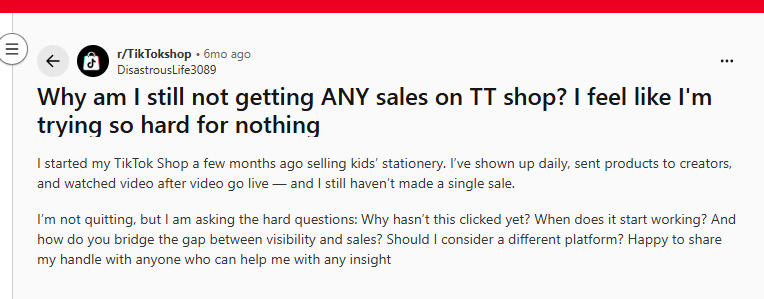
Most sellers don’t have a content problem, they have a system problem. Without a repeatable process, content creation turns into a scramble every single week. The ideas run out first, usually within the first month, and scripting starts eating hours that should be going toward filming and testing.
Posting slows down or gets inconsistent, not because the seller doesn’t care, but because there’s no organized workflow connecting research, scripting, and production into one process.
Content goes out, but nobody circles back to analyze what actually worked, so the same mistakes repeat. And too many sellers are still riding the momentum of a single viral video from months ago, with no real plan for what happens when that video stops performing.
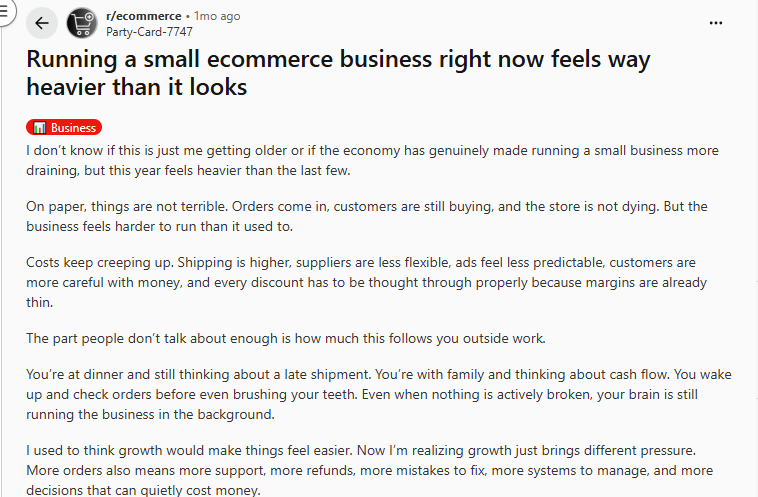
These struggles show up constantly in seller communities, where the frustration is less about creativity and more about volume, structure, and burnout.
This is where professional TikTok Shop content creation services can help by providing the strategy, creative support, and production systems needed to maintain consistent, performance-focused content.
What Is an AI-Powered TikTok Shop Content System?
Most sellers operate on a simple loop: create, post, hope. It works occasionally, but it isn’t repeatable, and it burns out creative teams fast.
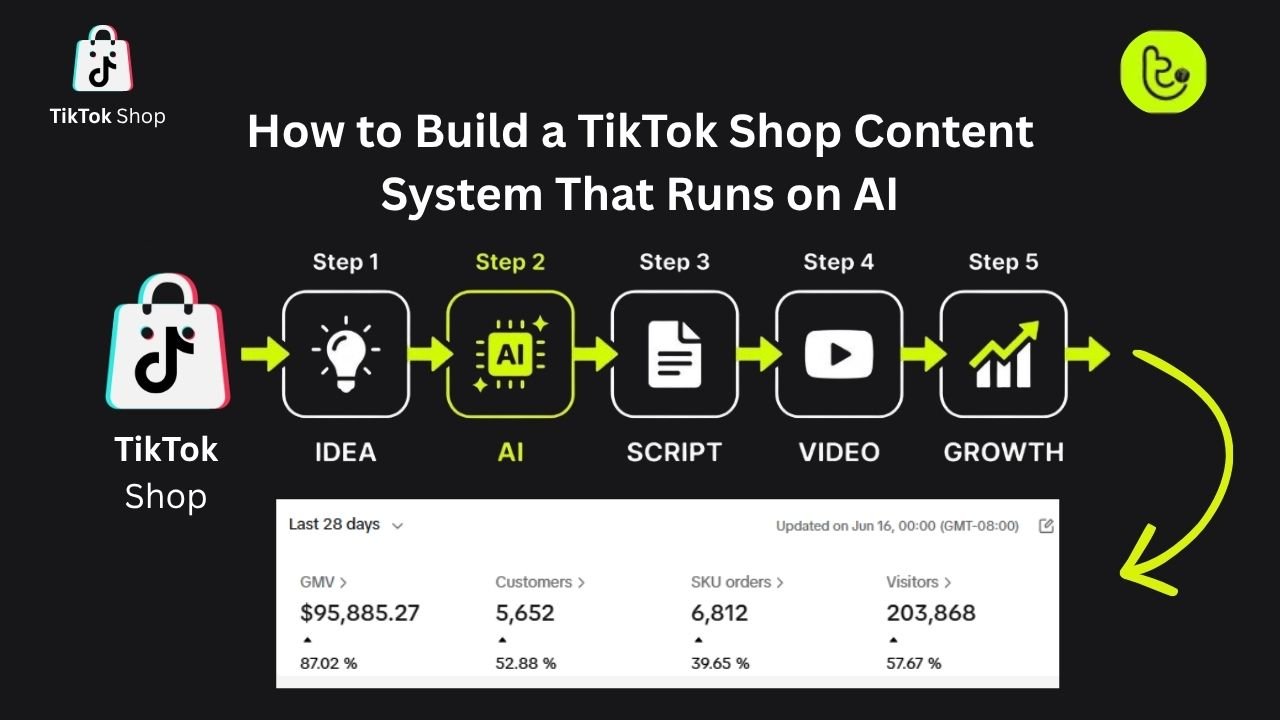
An AI-powered content system replaces that loop with a structured pipeline. It starts with research, moves into idea generation, then script writing and a creative brief, followed by video production and publishing. From there, performance analysis feeds into optimization, and the whole cycle repeats, each time a little sharper than the last.
AI doesn’t replace the creator at any point in this pipeline. It supports every stage, speeding up the parts that used to take hours, so your team can spend more time on delivery, direction, and the creative decisions that actually move sales.
Step-by-Step: How to Build a TikTok Shop Content System That Runs on AI
Building an AI-powered content system isn’t about adding more tools to your workflow. It’s about creating a repeatable process that helps you consistently research, produce, test, and improve content. Follow these seven steps to build a system that saves time while giving every video a better chance of driving sales.
Step 1: Build an AI-Powered Research Process
Strong content starts with real customer language, not guesswork. Use AI to accelerate research across product positioning and competitor creative gaps, then go deeper into comment mining on your top-performing videos and Amazon reviews, where objections and praise show up in the customer’s own words.
Reddit threads are especially useful here, that’s often where buyers describe their problems most honestly, without a brand watching. Round this out with TikTok search suggestions for trending questions and whatever objections your sales team already hears on repeat.
Your content becomes stronger when AI starts with real customer language instead of assumptions about what your audience wants to hear.
Step 2: Create a Repeatable Content Idea Database
Instead of brainstorming from zero every week, build a living database organized by content type. Problem videos, myth-busting videos, and comparison videos tend to perform well early in the funnel, while before-and-after content, customer stories, and product demos work harder further down.
Round out the database with FAQs, objection-handling videos, and UGC concepts so you always have an angle ready regardless of what the week’s testing calls for.
AI can generate dozens of variations within each category in minutes, giving your team a running backlog instead of a blank page every time a new video is due.
Step 3: Use AI to Draft Video Scripts Faster
Once you have an idea, AI can draft the first pass of a script, the hook, the body structure, and a handful of CTA variations, and it can do this across different creator styles and different customer awareness levels, from cold audiences who’ve never heard of the product to warm ones who are close to buying.
Never publish AI output without editing. Human experience is still what makes a script persuasive, the rhythm, the timing, the specific detail that makes a hook feel real instead of generic.
Step 4: Build Standard Creative Briefs
A strong brief keeps creators aligned and cuts down on revision cycles. Your brief template should walk through creator instructions, camera angles, and a clear shot list, along with the visual cues and product focus that matter most for that particular video. Add B-roll ideas and on-screen text so nothing gets left to interpretation on set.
Standardizing this template means every creator gets the same level of clarity, which reduces back-and-forth and gets more usable footage on the first take.
Step 5: Create Multiple Variations Instead of One Video
A single script and a single hook give you a single data point. Instead, build out variations for every concept, more hooks, more openings, more endings, more captions, and where possible, more than one creator delivering the same core idea. The table below shows the shift in practice:
Old approach | System approach |
|---|---|
Old approach | System approach |
1 hook | 5 hooks |
1 opening | 3 openings |
1 ending | 2 endings |
1 caption | Multiple captions |
1 creator | Different creators |
More variations mean faster, clearer testing, you learn what’s actually driving performance instead of guessing after the fact.
Step 6: Organize Your Content Library
As output scales, organization becomes the difference between a system and chaos. Set up clear naming conventions from the start, then build out a hook database alongside folders for winning scripts and losing scripts, the losing ones are just as valuable, since they show you what to avoid repeating.
Keep a UGC archive and a performance dashboard running alongside all of it so nothing gets buried.
A well-organized library means your team is never rebuilding from scratch, every new video starts from what’s already been proven to work.
Step 7: Train AI Using Your Own Winning Content
The best AI system learns from your own data, not just general prompts. Feed it your best-performing scripts, your top comments, and real customer reviews, along with the sales objections your team hears most and the creatives that have already won.
Over time, this feedback loop produces sharper first drafts, closer to your brand voice, and better aligned with what your specific audience already responds to.
What AI Can Automate and What Still Needs Human Input
AI is fast at pattern recognition and first drafts, and it earns its keep in the stages of the process that used to eat the most time, research, idea generation, first-draft scripts, brief creation, content organization, and trend summaries.
Everything downstream of that still needs a human hand: brand voice, storytelling, authentic delivery, creator direction, final approval, and the creative decisions that actually determine whether a video converts. The table below breaks down the split:
AI Handles | You Handle |
|---|---|
Research | Brand voice |
Idea generation | Storytelling |
First draft scripts | Authentic delivery |
Brief creation | Creator direction |
Content organization | Final approval |
Trend summaries | Creative decisions |
AI can’t replicate brand judgment, timing, or the instinct for what will actually resonate with your specific audience, that’s still a human call, every time.
Common Mistakes When Using AI for TikTok Shop Content
The most common failure point is publishing AI scripts without editing them, which almost always reads as generic and flat on camera. Close behind that is ignoring platform trends and formats, and creating content that could belong to any brand rather than yours specifically.
A lot of sellers also skip a testing framework entirely, lean on one prompt over and over instead of refining it, and never build a feedback loop between performance data and future scripts. The end result is a team measuring how much content they’ve shipped instead of what that content actually converted.
How Tiksly Builds AI-Powered TikTok Shop Content Systems That Actually Sell
Tools create content. Systems create revenue. A stack of AI prompts can produce scripts all day, but without research discipline, structured testing, and a feedback loop tied to real sales data, that output rarely turns into consistent growth.
Tiksly’s Content Production Process
Tiksly combines AI-assisted speed with a structured, data-backed process. It starts with product research and competitor creative analysis, then broadens into market research before moving into script testing and creative briefs.
From there, right creators are matched to the concept, videos go into production, and performance is tracked closely enough that winning creative can be identified and scaled quickly rather than left to chance.
What Makes Tiksly Different
Tiksly is an official TikTok Shop Creative Partner, which means every creative decision is grounded in data rather than guesswork. Script testing runs continuously, not as a one-off exercise, inside AI workflows that are structured to iterate based on performance rather than intuition alone. The result is content production that’s built to scale, backed by a dedicated creative strategy behind it.
If your content output has plateaued or your team is stretched too thin to test consistently, Tiksly’s process is built to take that weight off your plate while keeping every creative decision grounded in real performance data. Explore how a structured, AI-supported system could support your brand’s next stage of growth.
Conclusion
AI works best inside a structured system, not as a replacement for one. Consistency beats chasing viral moments, and testing, organization, and continuous learning compound results over time.
The brands that scale on TikTok Shop aren’t producing more random content. They’re refining a repeatable process powered by AI and informed by real customer insights.
If you’re ready to turn your TikTok Shop content into a structured growth system, book a 1:1 consultation with Tiksly to discuss your current challenges, creative strategy, and how a data-driven content workflow can help you create videos designed to convert.
Frequently Asked Questions
How do you build a TikTok Shop content system with AI?
Start by structuring your workflow into clear stages, research, idea generation, scripting, creative briefs, production, publishing, performance analysis, and optimization, then use AI to speed up the research and drafting stages while keeping human review at every step before content goes live.
Can AI create TikTok Shop video scripts?
Yes. AI can draft hooks, body structure, and CTA variations quickly, but scripts should always be edited by a human before filming to make sure the language, timing, and tone feel authentic to your brand and creator.
What’s the best AI workflow for TikTok Shop sellers?
The strongest workflows use AI for research, idea generation, and first-draft scripting, then rely on human creators and strategists for final editing, direction, and approval, with a testing framework that feeds performance data back into future content.
Does AI replace TikTok creators?
No. AI removes repetitive production work like research and first drafts, but the delivery, authenticity, and creative judgment that make a video convert still come from human creators.
How often should you create new TikTok Shop content?
Consistency matters more than any specific number, most successful sellers publish frequently enough to keep testing multiple hooks, angles, and creators every week rather than relying on occasional, one-off videos.
What’s the biggest mistake sellers make when using AI?
Publishing AI-generated scripts without editing them, and treating AI output as a finished product rather than a faster starting point for human-led creative work.