 Ayesha Khan
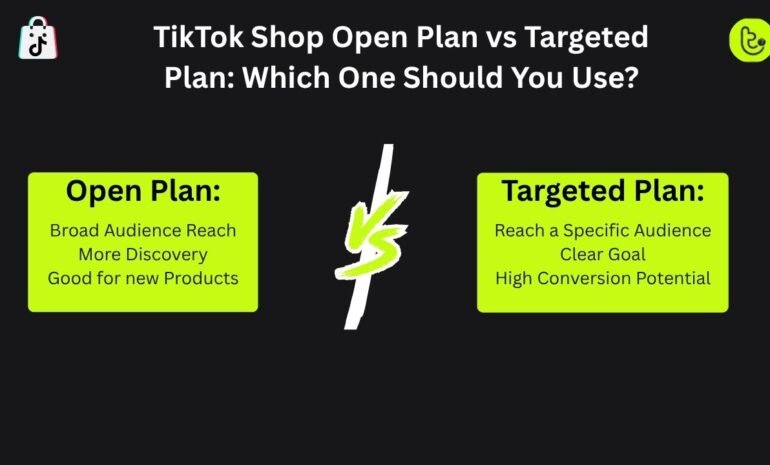
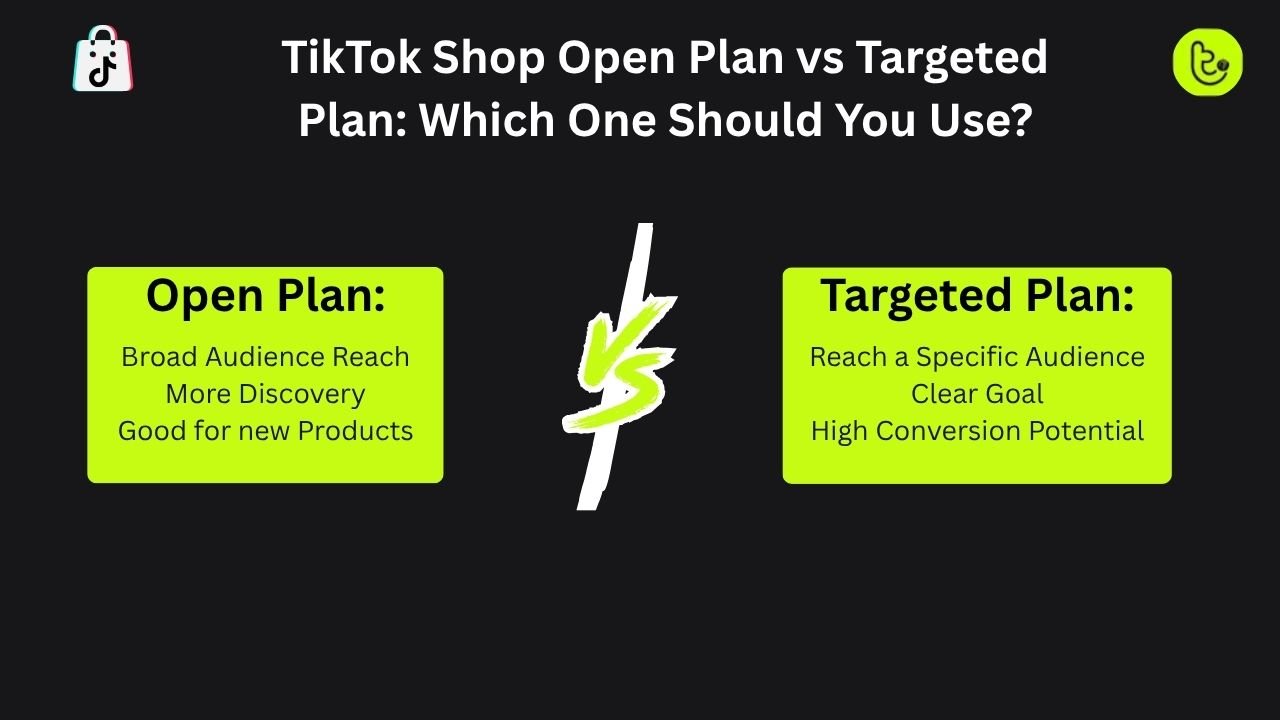
TikTok Shop Open Plan vs Targeted Plan comes down to who picks the creators. In an open plan, called Open Collaboration on TikTok, eligible creators can discover and promote your products. In a targeted plan, called Target Collaboration, you invite specific creators. Choose open for broader discovery and targeted for more control over creator selection.
The right approach depends on your campaign goals, product, creator strategy, and how much control you want over who promotes your products. In this guide, we’ll compare Open Collaboration and Target Collaboration, explain how each works, highlight common mistakes, and help you decide which approach makes sense for your TikTok Shop strategy.
[A quick note on terms. TikTok’s Help Center uses “open collaboration” and “target collaboration.” Many sellers still say “open plan” and “targeted plan,” so this guide uses both. Either one is a TikTok Shop affiliate plan you manage in the Affiliate Center.]
What Is TikTok Shop Open Collaboration?
TikTok Shop Open Collaboration is the option that makes products in your shop available for creators to promote to their followers. TikTok recommends it when you don’t have a specific creator in mind and want creators to reach out to you.
You can set it up for selected products or for everything in your shop. TikTok may also recommend products for it when they’re in high demand. You manage it from the Open Collaboration page in the Affiliate Center, inside the Seller Center. TikTok’s setup guide says you can choose up to 50 products during setup, and there’s an option to auto-add new products.
Put simply, you set the offer and creators decide whether it’s worth their time.
What Is TikTok Shop Target Collaboration?
TikTok Shop Target Collaboration lets you invite certain creators to promote specific products on your behalf. TikTok says to use it when you already have a creator in mind.
You set it up for individual products. For each one, you can offer free samples or issue refunds when a creator makes a first sale. You search for creators on the Find creators page in Seller Center, where TikTok also shows recommended creators, such as those who promoted similar products. Invitations can go out individually or in bulk. You choose how long the collaboration lasts and can request certain content types.
You also pick a fee structure. A flat fee is paid through TikTok Shop after videos are approved and only works for video. Commission-only means you pay when a sale happens. If you’re still building a shortlist, this guide on how to find TikTok Shop influencers covers the discovery side.
TikTok Shop Open Plan vs Targeted Plan: Key Differences
The main difference is who starts the relationship. With open, creators come to your products. With targeted, you go to creators.
Factor | Open Plan / Open Collaboration | Targeted Plan / Target Collaboration |
|---|---|---|
Creator access | Products are available to creators on TikTok Shop | Only creators you invite |
Product discovery | Creators find and choose products themselves | Creators receive your invitation |
Seller control | Lower. You set products and rates, creators opt in | Higher. You choose creators, duration, and content types |
Creator selection | Creators self-select | You select through Find creators |
Outreach approach | Creators reach out to you | You reach out, individually or in bulk |
Commission setup | Set in the Open collaboration page | Set per product, 1% to 80% of GMV per order |
Campaign purpose | Broad availability without a specific creator in mind | A specific creator promoting specific products |
Best use cases* | Testing interest, wider product ranges | Focused campaigns, known creators |
Potential challenges* | Less say over who promotes | Research and invitations take time |
Management requirements | Review added products, stock, and creator activity | Manage invitations, samples, and terms |
*Strategic reading, not a TikTok statement.
Can you use both?
Yes. TikTok says a product can be in an open collaboration and a target collaboration at the same time. Creators only get paid one commission rate per product, and TikTok recommends setting a higher rate for targeted plans because the target rate takes priority.
How Does Open Collaboration Work?
Here is the general workflow, based on TikTok’s Help Center.
- Choose your products. Go to Affiliate, then Open collaboration in Seller Center and add products. Pick items with healthy margins and enough stock. Avoid adding everything without checking inventory.
- Set your TikTok Shop affiliate commission. You’ll see rates for each product on the Open collaboration page. Base them on margin, not guesswork.
- Review who’s promoting. The Added products tab shows your products and the creators who posted about them. Look at content quality, not just follower count.
Why it matters: open gives you creator discovery with little outreach work. How to approach it: treat early results as a test. What to avoid: assuming products will sell just because they’re listed. Community discussions and practitioner guides often describe open as a way to spot performers, but that’s a common approach, not TikTok policy.
How Does Target Collaboration Work?
- Define your creator criteria. Decide the audience, content style, and product fit you want before searching. Avoid inviting creators just because their numbers look big.
- Set up products and rewards. Choose products, commission, and whether to offer free samples. Check stock first, as TikTok reminds sellers to do.
- Search and invite. Use Find creators and the recommendation filters. Good TikTok Shop creator outreach means clear invitations with duration and content requests. TikTok’s Academy notes you can send up to 1,000 target collaborations in 24 hours, but volume isn’t the goal.
- Track and adjust. Review results, then decide who to keep working with.
Why it matters: you control who represents your product. What to avoid: generic invitations that don’t explain why the creator fits.
Which TikTok Shop Approach Should You Use?
Use this three-question framework. It’s a strategic tool, not TikTok policy.
1. Do you need broader creator discovery? If yes, open makes sense.
2. Do you already have specific creators in mind? If yes, target makes sense.
3. How much control do you need over creator selection and outreach? More control points to target. Less points to open.
Consider open when: you’re testing creator interest, you have products with wide appeal, or you don’t have a shortlist.
Consider target when: you have specific creators, you’re running a focused campaign, or you have clear creator criteria.
Which is better for a new seller? Neither wins universally. A new seller without creator contacts may lean open. One with a clear creator list may start with target. Your products, commission, goals, and time decide, so build your TikTok Shop affiliate plan around your goal.
Does Open Collaboration guarantee sales? No. Making products available doesn’t mean creators will pick them, post, or convert viewers. Does Target Collaboration guarantee performance? No. An invitation isn’t a promise, and creators can decline.
Open vs Targeted: Hypothetical Example
A skincare brand launches a new serum and wants to see which creators show interest. It adds the product to open, sets a commission that fits its margins, then reviews which creators post and how the content looks.
Later, it identifies a smaller group of creators whose audiences match the product. It sends them target invitations with samples, a set duration, and a higher commission. If a creator is in both, the target rate applies. No results are implied here, since this is only a way to picture the workflow.
Common Mistakes to Avoid
Choosing between Open Collaboration and Target Collaboration is only part of the process. Avoiding these common mistakes can help you manage creator campaigns more effectively
- Choosing without a goal: Decide whether you want broader creator discovery or focused outreach before choosing an approach.
- Focusing only on followers: Consider audience relevance, content quality, engagement, and niche.
- Setting commission blindly: Check your product costs and margins before setting a commission.
- Sending generic invitations: For targeted outreach, explain why the product suits the creator’s audience.
- Skipping content reviews: Review creator content to assess quality and product relevance.
- Expecting automatic sales: Open Collaboration can increase creator access, but it doesn’t guarantee promotion or sales.
- Assuming targeted outreach guarantees results: Selecting specific creators does not guarantee views, conversions, or sales.
- Ignoring creator activity: Monitor who responds, posts content, and remains inactive.
- Using outdated information: Check current TikTok Shop documentation because features and terminology can change.
How Commission and Creator Selection Affect Your Choice
TikTok Shop affiliate commission is where strategy meets math. In a target collaboration, you can set 1% to 80% of GMV per order for each product. TikTok doesn’t publish a “correct” rate, and this article won’t either.
Start with product economics. Look at your margin after product cost, shipping, and fees. Then think about creator incentives. A creator choosing between products may weigh how much they earn. That’s why many sellers pair a modest open rate with a higher targeted rate for proven creators, though that’s a strategic choice.
Also check relevance. A generous commission won’t help if the product doesn’t suit the creator’s audience. If you plan to reuse creator videos in paid promotion, this breakdown of a TikTok Shop ads strategy shows how creator content can feed ads. TikTok also sets a minimum Shop Ads commission for open, at 30% of your Standard commission.
How Tiksly Can Help With TikTok Shop Creator Outreach
Some sellers know which plan fits but lack time to run it. That’s where Tiksly can help. Its Influencer Outreach service covers creator research, outreach, sample sending, and creator management, which suits a targeted campaign. If you want ongoing support across your shop, TikTok Shop management covers the day-to-day work.
Two related services may also matter. TikTok Shop advertising covers ads such as Spark Ads, and content creation supports the videos behind your campaigns.
Conclusion
TikTok Shop Open Plan vs Targeted Plan comes down to your campaign goal. Choose Open Collaboration when you want creators to discover your products, and consider Target Collaboration when you already have specific creators in mind. Use the three-question framework, check your commission economics, and review your setup regularly as TikTok Shop features can change.
If you need help planning your TikTok Shop creator strategy, book a free 1:1 consultation with Tiksly experts.
FAQs
What is the difference between TikTok Shop Open Collaboration and Target Collaboration?
Open makes products available to creators who choose to promote them. Target lets you invite specific creators. Open suits discovery, and target suits control, but neither guarantees results.
Can a TikTok Shop seller use both?
Yes. TikTok says one product can be in both. Creators earn one commission rate per product, and the target rate takes priority, so many sellers set a higher rate for targeted plans.
Is Open Collaboration better for new sellers?
Not always. It can suit sellers without a creator shortlist, since creators can find products on their own. A seller with clear creator targets may prefer target. Stock, margins, and time matter either way.
When should a seller use Target Collaboration?
Use it when you already have a creator in mind, per TikTok. It also fits focused campaigns and situations where you want to choose creators, duration, and content types.
Does Open Collaboration guarantee sales?
No. Listing products only makes them available. Sales depend on creators choosing them, content quality, product appeal, price, and commission. Track results instead of assuming them.